VIDEO CALL REQUEST

Choose a Time to Talk

Select an available 45-minute window, then tell us how to reach you. We will confirm the appointment and send the Google Meet details after reviewing the request.

45-minute video call. Times shown are Eastern. At least one day’s notice is required. Faded blocks are unavailable.

START A CONVERSATION

Tell Us What the Business Needs

Share the same project details requested on our homepage in two short steps. We will review the information and respond using the communication method you select.

ABOUT 2 MINUTESTwo focused steps
NO OBLIGATIONA practical first conversation
PERSONALIZED RESPONSEBased on the business and its goals
QUOTE & PROJECT DETAILS

Request a Website & Marketing Proposal

Tell us what the business needs, what is changing, and which services you are considering. We will review the details before recommending the most useful next step.

FOUR FOCUSED STEPSAbout 3 minutes
NO OBLIGATIONClear guidance without pressure
PERSONALIZED REVIEWBased on the business and its goals
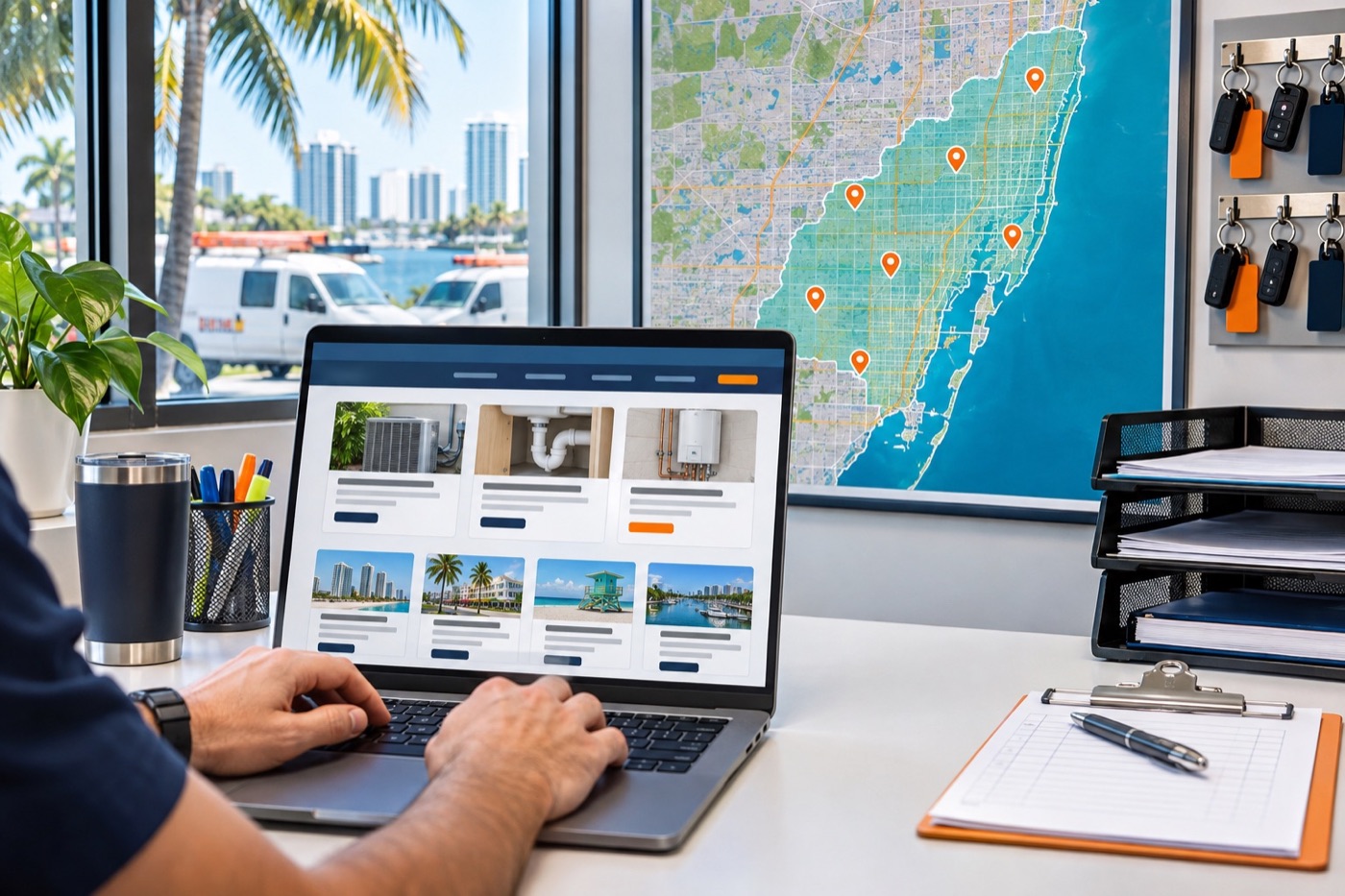
South Florida restaurant and local service vehicles representing businesses competing for nearby customers

Home  /  Digital Trends  /  Local Search

LOCAL SEO + SERVICE AREA VISIBILITY

How to Optimize Your Website for Local Search

Local search optimization helps restaurants, HVAC companies, plumbers, electricians and other service providers appear when nearby customers are actively looking for what they offer. This guide explains the website, Google Business Profile, reputation, technical and measurement work needed to compete responsibly.

Written and technically reviewed byMaarit DurityPublished Feb. 26, 2026 • Updated Nov. 11, 2026 • 20-minute read

THE SHORT ANSWER

How Do You Optimize a Website for Local Search?

Local search optimization makes a business easier to understand, verify and choose when someone searches for a nearby provider. The work connects the website, Google Business Profile, service-area information, reviews, local references and technical signals so the same business facts reinforce one another across Search and Maps.

For a restaurant, that may mean accurate hours, menus, reservation information, neighborhood context and strong photos. For an HVAC company, plumber or electrician, it means distinct service pages, realistic service-area coverage, emergency or scheduling information, proof of completed work and an easy path to call or request service. A local strategy must reflect how customers actually search and how the business actually operates.

There is no setting that guarantees a local pack position. Google states that local results are mainly based on relevance, distance and prominence. A business can improve its relevance and prominence, but it cannot rewrite the searcher’s location or buy an organic local ranking.

Local SEO definition: Local SEO helps search engines connect a real business, its services and its service area with nearby customers who are looking for them.

Local Search Is a Connected Business System

Local visibility does not come from one listing or one city name added to a homepage. Search engines compare information from the business website, Business Profile, directories, reviews and other public sources to determine what the company does, where it operates and whether the information appears dependable. Customers make a similar comparison before they call, book, visit or request an estimate.

The four layers below do different jobs, but they should describe the same business. A mismatch can confuse customers even when it does not cause an obvious technical error.

LayerWhat it establishesWhat the business should control
WebsiteServices, service process, expertise, locations, proof and conversion pathsDomain, content, technical access, service pages, location pages, analytics and forms
Google Business ProfileMap eligibility, category, location or service area, hours, photos and reviewsPrimary ownership, accurate categories, address or service area, hours, links and updates
Reputation and local referencesIndependent evidence that the business exists and serves customers in the marketReview requests, responses, listings, associations, local coverage and corrections
MeasurementWhether visibility produces calls, bookings, directions, forms and qualified customersSearch Console, analytics, Business Profile performance, call tracking and lead records

How Local Search Differs from General SEO

General SEO can target people regardless of where they are located. Local SEO adds geographic intent: the customer wants a provider, place or service within a practical distance. A search for “how an air conditioner works” needs a different page than “AC repair near me,” “commercial HVAC West Palm Beach” or “electrician open now.”

Google explains that local results are mainly determined by relevance, distance and prominence. Relevance reflects how closely the business matches the search. Distance considers how far the business is from the searcher or the place named in the query. Prominence reflects how established and well-known the business appears through factors that can include reviews, links and information found across the web.

The website cannot control every local result, but it can make the business substantially clearer. Accurate service descriptions, location evidence, internal links, fast mobile performance and consistent business information give search systems better material to interpret.

Which Service Providers Benefit Most from Local Search?

Local SEO matters whenever customers choose a provider based partly on location, response area, convenience or the ability to visit. The strongest opportunities often combine geographic intent with an immediate or commercially important need. A national audience is not required; the goal is to be visible to the people the business can realistically serve.

Different business models require different local signals. A storefront needs to help customers decide whether to visit, while a service-area company must explain what it does, where technicians travel and how quickly or reliably service can be arranged.

Businesses that commonly depend on local discovery include:

  • Restaurants, bars, cafés and food trucks that need accurate hours, menus, photos, ordering or reservation details and neighborhood relevance.
  • HVAC contractors that serve residential or commercial customers across defined cities, counties or dispatch zones.
  • Plumbers and electricians that compete for urgent, scheduled and specialty service searches.
  • Roofers, restoration companies, pest-control providers, landscapers and other field-service businesses.
  • Physicians, dentists, therapists, veterinary practices and other appointment-based providers.
  • Attorneys, accountants, financial professionals, consultants and business-service firms with local client relationships.
  • Auto repair, collision, towing and specialty vehicle businesses whose customers consider proximity and availability.
  • Multi-location companies that need every legitimate location represented accurately without creating duplicate or competing pages.

THE WEBSITE CONNECTS SERVICE AND LOCATION

A local service website needs complete pages, accurate service-area information and clear conversion paths. Its structure should show what the company offers, where it works and what customers should do next.

Build the Website Before Chasing Local Rankings

A Business Profile can introduce the company, but the website must complete the evaluation. Customers often leave the map result to confirm services, credentials, availability, photos, pricing context, policies or the next step. A thin or confusing site can waste visibility that the profile worked to earn.

The website should establish the business name, primary services, actual service area and preferred conversion action quickly. It should also provide enough detail for a customer to distinguish the company from directories, lead sellers and competitors repeating the same generic claims.

The website foundation should include:

  • A focused page for each important service rather than one page that briefly lists everything.
  • Clear contact, scheduling or reservation paths that work on mobile devices.
  • Accurate business name, address when publicly displayed, phone number and operating information.
  • Original photos, examples, credentials, policies and process details that support trust.
  • Descriptive page titles, one clear H1, logical headings and internal links between related services and locations.
  • Crawlable text that explains the service instead of relying entirely on images, sliders or videos.
  • Secure hosting, fast loading, stable layouts and forms that are tested regularly.
  • Analytics and conversion tracking configured before major optimization work begins.
Local Visibility Depends on More Than One Asset
WEBSITEComplete service pages

Original service content, clear locations, strong internal links and reliable mobile conversion paths help customers and search systems understand the business.

BUSINESS PROFILEAccurate Search and Maps information

Correct categories, hours, service areas, photos and destination links connect the listing to the website and the real operation.

REPUTATIONReviews and local evidence

Honest customer feedback, credible listings and verifiable market activity help people evaluate whether the company is established and relevant.

MEASUREMENTCalls, forms, bookings and qualified leads

Visibility matters when it produces actions the business can serve, track and connect to meaningful outcomes.

Google Business Profile Connects Search, Maps and the Website

The Google Business Profile is one of the most visible local assets a company controls. Google recommends verifying the business and maintaining complete, accurate information, including the category, address when customers visit, service area when appropriate, hours, attributes, photos and review responses. The profile should send customers to the most relevant page instead of a generic destination whenever Google permits a specific link.

Categories deserve particular care because they describe what the business is, not every service it hopes to rank for. The primary category should match the central business model, and secondary categories should remain accurate. Service-area businesses should follow Google’s address and service-area rules rather than creating false offices or virtual locations.

Profile work is not finished after verification. Holiday hours, phone numbers, links, services, photos and business changes must remain current, and the account should be owned by the business with outside providers added as managers. Our guide to Google Business Profile services explains the management and optimization work in more detail.

Service Pages and Location Pages Need Different Jobs

A service page answers what the company does. A location page explains how that service relates to a real market, customer base and service operation. Combining every service and every city into one page makes both subjects vague, while duplicating the same city paragraph across dozens of pages produces little value.

Start with the services that produce meaningful revenue and the locations the company can honestly support. Then research how customers in each market describe the need, which result formats appear, what local competitors explain well and what information remains unanswered. A page should exist because it helps a person make a decision, not because a city name can be inserted into a template.

The Squarespace local SEO guide also emphasizes location-specific content, reviews, profile accuracy and an ongoing content plan. The platform is less important than whether the business maintains original, crawlable pages that match the market and the service.

A strong service-and-location structure usually separates:

  • Core service pages that explain scope, process, qualifications, limitations and next steps.
  • City or regional pages with original market context, service coverage and locally relevant questions.
  • Individual location pages for legitimate offices, restaurants, clinics or branches with distinct information.
  • Supporting articles that answer research-stage questions without competing with the primary service page.
  • Internal links that help people and search systems move naturally among the service, location and supporting resources.

A Practical Local SEO Checklist for Business Owners

Local optimization is easier to manage when the work is divided into assets, implementation and verification. The checklist below can be completed by an owner, an internal employee or an experienced provider, but every item needs a named person responsible for it. “Someone updates that” is not an operating system.

The first pass should document the current state before changes are made. Save access details, baseline performance, existing URLs, profile ownership and the business information currently appearing across the web. That record makes later improvements and mistakes easier to evaluate.

Complete These Local Search Fundamentals
Use this checklist as an implementation brief and a quarterly review. A checked item should mean the asset was verified, not merely assumed.

  • Confirm the business owns its domain, website administrator access, Google Business Profile, analytics and Search Console accounts.
  • Verify the correct primary Business Profile category, legitimate address or service area, phone, hours and website links.
  • Define the highest-value services and the cities or service zones the business can actually support.
  • Research local queries, map results, organic competitors, AI answers and customer questions for each priority service.
  • Create or improve one complete page for each priority service.
  • Build original location pages only where the market and service coverage justify them.
  • Keep business information consistent across the website, profile and important directories.
  • Add accurate LocalBusiness structured data that matches the visible website content.
  • Request reviews through a repeatable, policy-compliant process and respond professionally.
  • Improve mobile speed, navigation, click-to-call behavior and form reliability.
  • Link the Business Profile to the most relevant eligible website destination.
  • Track calls, forms, bookings, directions and other qualified actions.
  • Review rankings and map visibility by location without treating one search from one device as definitive.
  • Recheck ownership, hours, categories, links, forms and conversions every quarter.

Reviews, Citations and Local Evidence Reinforce the Business

Reviews influence customer confidence and can contribute to local prominence, but the goal is not to force customers to repeat keywords. Ask for honest feedback after a real interaction, make the process easy and never offer an incentive that violates platform rules. Responses should sound like the business, address concerns appropriately and avoid exposing private customer information.

Citations are public references to the business name, address and phone number on directories, associations, maps and industry resources. Accuracy matters more than chasing every directory available. Correct high-value sources first, remove duplicates where possible and keep a record of accounts so future changes can be made efficiently.

Local evidence can also come from the website itself. Real project areas, staff credentials, community involvement, original photographs, local policies, parking or access details, delivery zones and market-specific guidance help customers understand that the company genuinely serves the area.

Strong local evidence may include:

  • Detailed, authentic reviews collected over time from real customers.
  • Consistent listings on major maps, directories and relevant industry resources.
  • Memberships, permits, licenses or professional credentials when they apply.
  • Original work examples tied to a legitimate market without exposing customer privacy.
  • Local media coverage, community participation or partnerships that actually occurred.
  • Clear address, service-area, parking, delivery or appointment information.
  • Staff and company information that can be verified across owned profiles.

Local Knowledge Changes the Optimization Strategy

Search data shows what people type, but it does not explain every reason a market behaves differently. Travel patterns, seasonal population changes, neighborhood names, bridge routes, county boundaries, weather, housing types, commercial districts and customer expectations can change which services matter and how far people are willing to travel. A provider who understands the area can spot geographic assumptions that a national checklist may miss.

That does not mean every company must outsource all local SEO work. An experienced local company can perform the research and implementation, build the strategy for an internal team, train employees, audit their work or provide continuing oversight. The important distinction is accountability: someone must connect the website, profile, market reality and measurement rather than treating each task as an isolated assignment.

For South Florida businesses, our SoFlo SEO approach combines search evidence with firsthand knowledge of the cities, counties, seasonal patterns and service areas being targeted. In another market, the same principle applies: the strategist should be able to explain how the business operates there, which assumptions were verified and how local observations changed the plan.

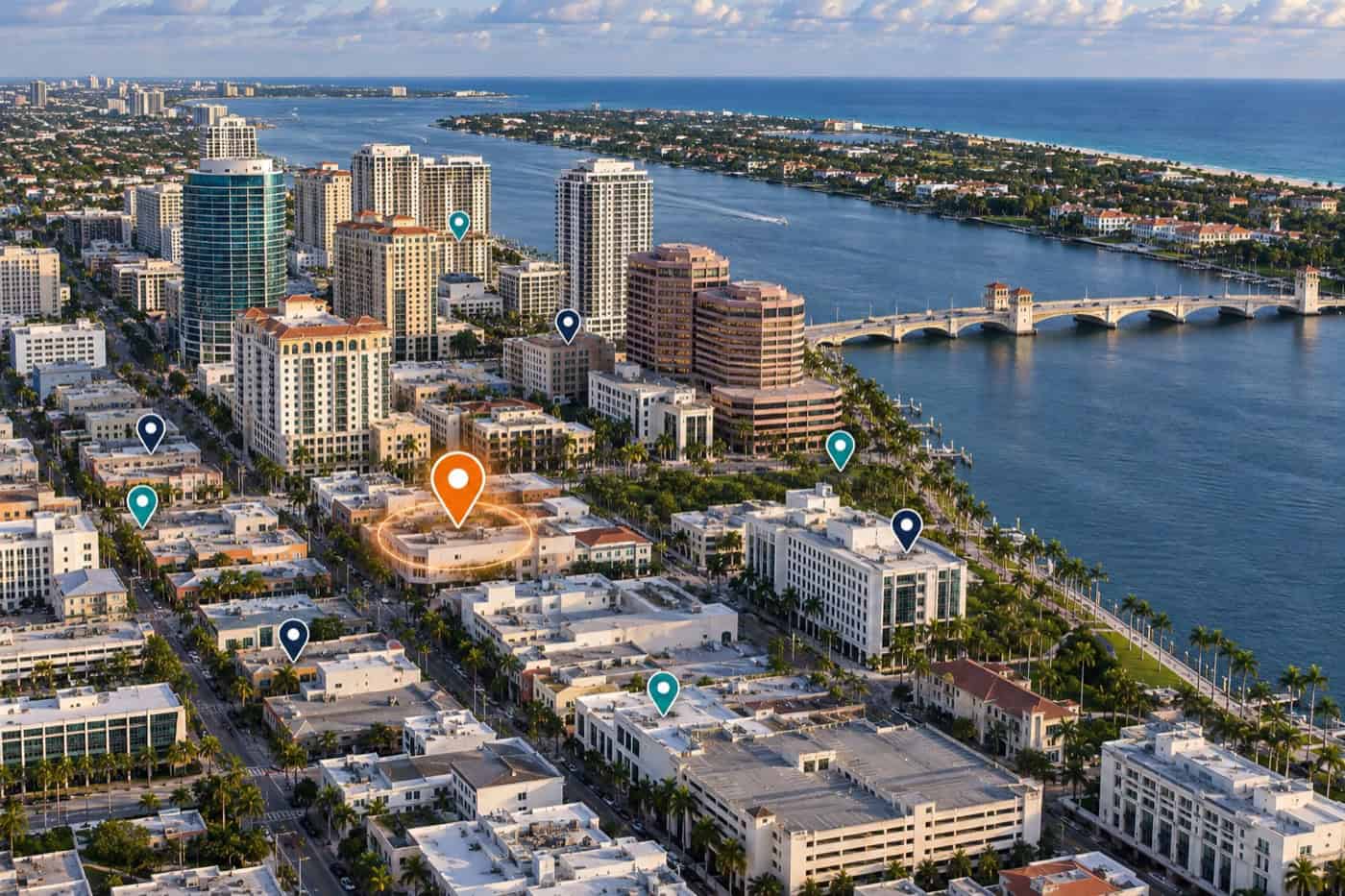
Aerial view of downtown West Palm Beach with local search map pins and one highlighted business location

Regional Context Improves Local SEO Decisions

Local visibility should reflect the market a business can actually serve, not an abstract radius on a map.

Routes, neighborhoods, seasonal demand and service boundaries affect the pages, profiles and evidence customers need before choosing a provider.

Measure Local Visibility by Actions, Not a Single Ranking

Rankings can help diagnose progress, but one manually repeated “near me” search is not a reliable report. Results can vary by exact location, device, time and search context. Measurement should combine search visibility with the actions that represent a real customer opportunity.

Google Search Console shows queries, pages, impressions, clicks and average position for organic search. Business Profile performance can report interactions such as calls, website visits and directions where available. Analytics and call or form tracking are needed to determine what happened after the visitor reached the website.

The Coursera local SEO strategy guide provides a clear overview of keyword research, profile management, competitor review and performance tools. The business still needs its own definition of a qualified outcome and a consistent way to record it.

A local search report should connect:

  • Priority queries and the locations where visibility matters.
  • Map, organic and other search appearances rather than one ranking type alone.
  • Landing pages receiving impressions and qualified visits.
  • Calls, forms, reservations, bookings, directions and confirmed leads.
  • Google Business Profile accuracy and interaction trends.
  • Review volume, response activity and recurring customer feedback themes.
  • Technical errors, indexing changes and website updates that may affect visibility.
  • Lead quality, service fit and revenue when the company can connect those records responsibly.

DIY, Internal Staff and Experienced Local Support

A business owner can complete much of the foundational work without hiring an agency. Google provides the profile, Search Console reports organic performance and modern website systems make content updates accessible. The challenge is not whether a field can be edited; it is whether research, priorities, technical details and measurement stay accurate over time.

Internal staff can be an excellent fit when they understand the services, customers and daily operation. They may need a strategist to establish the page architecture, research method, quality standards, reporting and review process. Consulting and oversight preserve internal knowledge while reducing expensive trial and error.

An experienced local search company becomes valuable when the website has technical problems, several services or locations compete with one another, the market is crowded, or no internal person has time to coordinate the work. The provider should be able to explain what it is changing, why the change fits the market, who owns every asset and how results will be measured.

Operating modelBest fitWhat must be in place
Owner-managedA small business with limited services, a manageable market and an owner willing to learn and maintain the assetsAccount ownership, a written checklist, protected time, baseline tracking and periodic verification
Internal teamA company with staff who understand customers and can publish, respond and maintain information consistentlyTraining, editorial and technical standards, defined responsibilities, approval paths and access to expert review
Consulting and oversightA capable internal team that needs research, architecture, audits, troubleshooting or strategic directionA clear scope, shared data, implementation accountability and scheduled reviews
Experienced local SEO companyA competitive, multi-service or multi-location business that needs coordinated strategy and implementationTransparent access, market knowledge, documented work, business-owned accounts and conversion measurement

Common Local SEO Mistakes That Weaken Visibility

Most local SEO problems are not caused by one missing field. They develop when the website, profile and public business information drift apart or when a company publishes pages without a real market purpose. Shortcuts may create more URLs while making the business harder to understand.

The repair usually starts with simplification. Confirm the legitimate business entity and locations, choose the services that matter, remove unsupported claims and strengthen the pages customers actually need. New content should follow only after the foundation can support it.

Avoid these recurring mistakes:

  • Creating false locations, virtual offices or duplicate profiles to appear closer to customers.
  • Changing the business name to include keywords that are not part of the real-world name.
  • Sending every service and profile link to a generic homepage.
  • Publishing near-identical location pages with only the city name replaced.
  • Hiding important service information inside images or scripts that are difficult to crawl or use.
  • Treating review requests as a one-time campaign instead of a continuing customer process.
  • Building hundreds of low-value directory listings while major profiles remain inaccurate.
  • Adding structured data that does not match the visible page or the actual business.
  • Measuring only rankings while calls, forms, bookings and lead quality go untracked.
  • Giving an outside provider primary ownership of the domain, profile or analytics accounts.
  • Hiring a provider that cannot explain the market, implementation or evidence behind its recommendations.

Local Visibility Has to Match the Market You Actually Serve

The strongest local search strategy makes a real business easier to verify and choose. It does not invent offices, stretch the service area beyond what operations can support or publish a city page for every place on a map. It connects accurate business information, complete service content, local evidence, mobile usability and measurement around the markets that matter.

Business owners can build that system themselves, assign it to trained employees or bring in experienced support for strategy, implementation and oversight. Whichever model is used, the company should own its accounts, understand what is being changed and measure whether local visibility is reaching the customers it can serve well.

LOCAL SEO QUESTIONS

Frequently Asked Questions About Local SEO

These answers address the questions business owners and internal teams ask when they need nearby customers to find, verify and choose a real local or service area business.

CLEAR ANSWERS, PRACTICAL CONTEXT

Local visibility cannot be reduced to one listing or one ranking. The questions below explain how websites, Business Profiles, reviews, service areas and local evidence work together, and what a company should control before investing in local search work.

READ THE FULL ANSWER BEFORE MAKING A DECISION
What is local SEO in simple terms?

Local SEO is the work of helping a business appear when people search for a nearby provider, place or service area. It connects the website, Google Business Profile, reviews, business information and geographic relevance so search engines can understand what the company does and where it operates. The goal is qualified local visibility, not merely adding city names to pages.

Start with complete service pages, accurate business information, clear service area coverage and a verified Google Business Profile. Then improve internal links, local relevance, reviews, mobile performance, structured data and conversion tracking. The work should make the business easier to understand and choose, not just repeat city names.

No. A Google Business Profile can earn visibility in Search and Maps, but the website provides the depth customers need to evaluate services, qualifications, examples, policies and next steps. The profile and website should support one another, and the business should own and control both.

No. Create a dedicated location page only when the business genuinely serves that market and can provide original, decision useful information. Near identical pages with only a city name changed add little value and can make the site harder to manage. Strong service pages and fewer complete location pages are usually better than dozens of thin ones.

Reviews help customers evaluate a business and can contribute to local prominence, but they are only one part of local SEO. Ask real customers for honest feedback, respond professionally and avoid incentives or scripted keyword requests. The website, profile accuracy, service relevance and local evidence still matter.

Yes. A legitimate service area business can hide its street address on Google when customers do not visit that location. It still needs accurate ownership, categories, service areas, contact information and website content that explains where service is available. False offices and virtual addresses create unnecessary risk.

Yes. An employee who understands the business can manage profile updates, reviews, content and reporting successfully when the company provides training, documented standards and protected time. An experienced strategist can establish the framework, audit implementation and provide oversight when technical or competitive issues require it.

Local knowledge helps turn search data into a realistic strategy. A provider familiar with the area can account for neighborhood names, travel patterns, county boundaries, seasonality, service zones and customer expectations that may not appear in a keyword report. The value should be visible in the research and recommendations, not treated as an unsupported claim.

AUTHOR + TECHNICAL REVIEW

Maarit Durity

Owner, website strategist, designer, developer, SEO practitioner, and content strategist at SoFloWeb.

Maarit has worked in websites and digital marketing for more than 25 years. She writes from direct experience planning, building, rebuilding, optimizing, and measuring business websites—and takes responsibility for the technical review of this article.

Learn more about SoFloWeb and Maarit’s experience →