VIDEO CALL REQUEST

Choose a Time to Talk

Select an available 45-minute window, then tell us how to reach you. We will confirm the appointment and send the Google Meet details after reviewing the request.

45-minute video call. Times shown are Eastern. At least one day’s notice is required. Faded blocks are unavailable.

START A CONVERSATION

Tell Us What the Business Needs

Share the same project details requested on our homepage in two short steps. We will review the information and respond using the communication method you select.

ABOUT 2 MINUTESTwo focused steps
NO OBLIGATIONA practical first conversation
PERSONALIZED RESPONSEBased on the business and its goals
QUOTE & PROJECT DETAILS

Request a Website & Marketing Proposal

Tell us what the business needs, what is changing, and which services you are considering. We will review the details before recommending the most useful next step.

FOUR FOCUSED STEPSAbout 3 minutes
NO OBLIGATIONClear guidance without pressure
PERSONALIZED REVIEWBased on the business and its goals
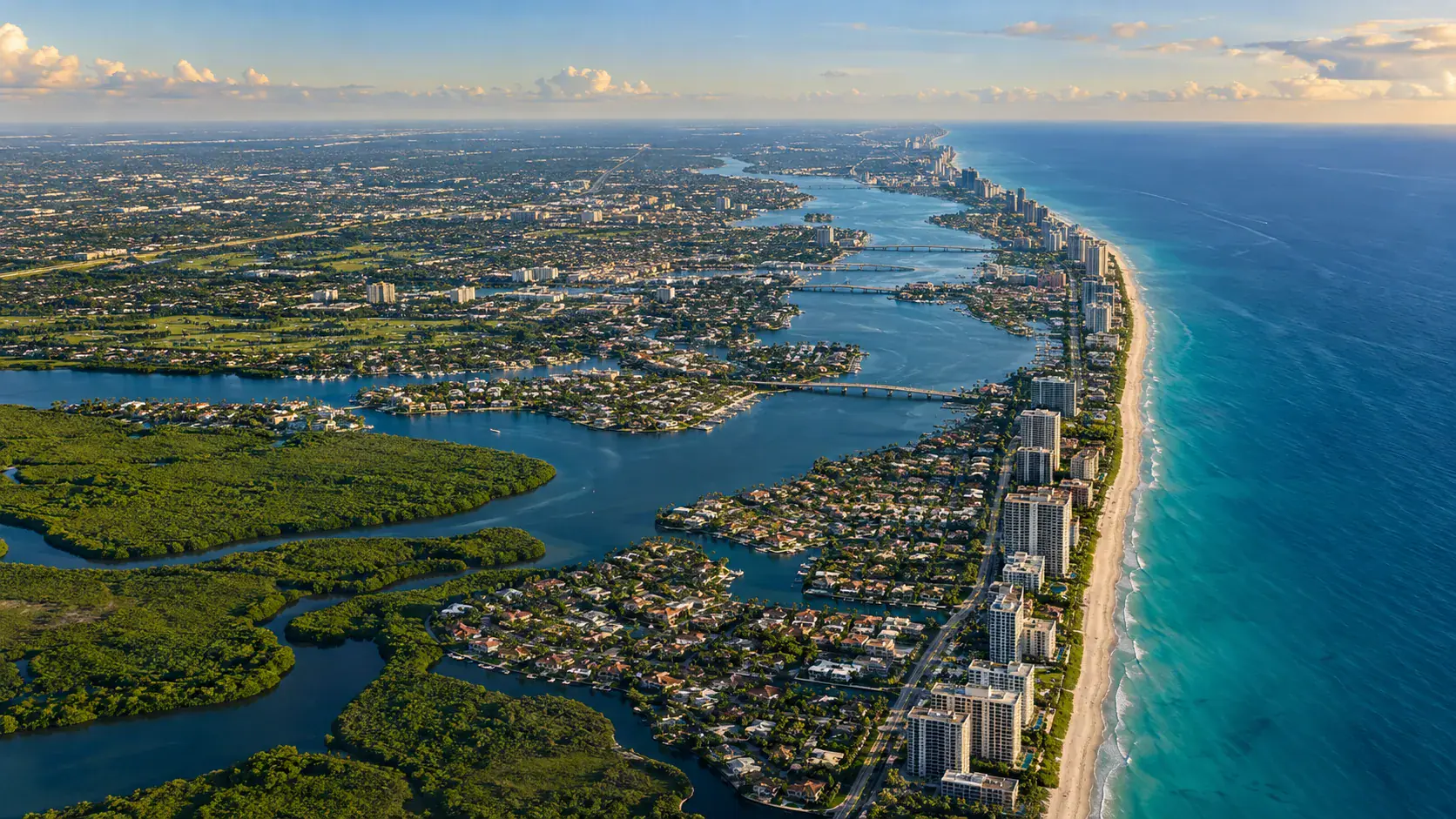
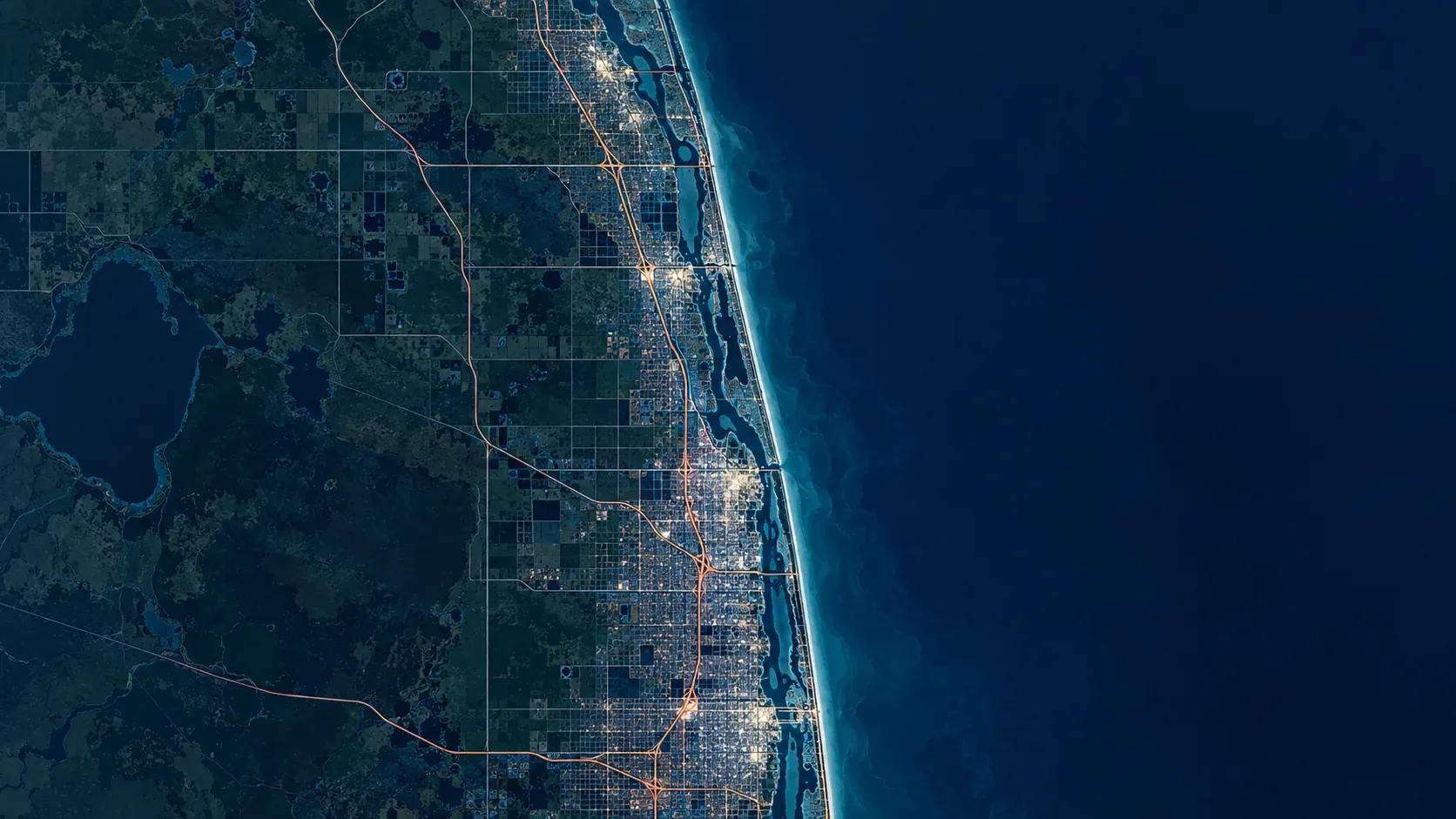
Stylized aerial view of South Florida coastal and inland business corridors for SoFlo SEO services

Home   /   SoFlo SEO

SOUTH FLORIDA REGIONAL SEO

South Florida
SEO Services

We are local to South Florida, so we understand how search behavior changes from Martin County to the Florida Keys. We combine that firsthand knowledge with technical SEO, useful content, and Search Console data to improve organic, map, and AI-driven visibility.
A LOCAL TERM WITH LOCAL MEANING

Search Visibility Built Around Real South Florida Markets

“SoFlo” is what many of us call South Florida because we live here and understand how its communities connect. We use that firsthand knowledge to help a business appear for the cities, services, and local searches aligned with its real service area and ideal customers.

For the website, content, and search foundation behind that visibility, review our Palm Beach County web design and SEO services.

PALM BEACH COUNTY
BROWARD COUNTY
MARTIN COUNTY
MIAMI-DADE COUNTY
MONROE COUNTY & FLORIDA KEYS
LOCATION CHANGES SEARCH BEHAVIOR

A Few Miles Can Change the Search Results and the Decision

Downtown business districts, coastal communities, western suburbs, equestrian areas, industrial corridors, and lower-density communities create very different search environments. We look at who is searching, the words they use, how far they will travel, and whether the city, neighborhood, county, or service itself best represents the decision.

Even two people standing in the same place can search the same phrase and see results in a different order or, in some cases, different results. Google states that most same-location searches will be the same or similar, but time, language, device type, recent searches, related activity, and personalized recommendations can change individual rankings or move an entire result block. Personalization is selective—not every result is personalized—and one ranking checked from one account or device never tells the full story.

AI Mode adds another layer. Google’s Personal Intelligence can use Search Services History and prior interactions to tailor AI responses; when a user chooses to connect supported Google apps, AI Mode can also use that personal context. These controls are optional, but they reinforce why search visibility must be evaluated across queries, locations, devices, result types, and real Search Console data rather than one screenshot.

The searcher may not be standing where the service is needed. A seasonal resident can search from another state, a property manager can work miles from the building, and a decision-maker can research a provider for several offices. We make the website’s service coverage clear without inventing an office, overstating a market, or publishing thin city pages that can weaken the site.

We know these roads, city relationships, and the difference between saying a business serves an area and proving why it is relevant there. That experience guides the strategy before we change a page or target a new location.

Questions That Shape the Local Strategy

Who is the actual decision-maker?

A year-round resident, seasonal homeowner, visitor, property manager, medical office, or business owner may describe the same need differently. We identify whose search is most likely to become a qualified inquiry.

What changes from one area to the next?

Condos near the coast, gated communities, downtown offices, suburban centers, warehouses, equestrian properties, and rural western acreage create different problems, expectations, and service radiuses.

Which location name do customers use?

People may search by city, neighborhood, county, landmark, “near me,” or a familiar regional name. Search Console data and the live results help show which wording deserves a page.

Why should Google trust this result?

Accurate business information, real expertise, useful service details, local context, reviews, project evidence, author information, and a technically sound website must support the same story.

WHAT A LOCAL MARKET STRATEGY EVALUATES

SoFlo SEO Connects Place, Intent & Business Value

Before we change an established URL or add another location page, we determine what the website already ranks for, which pages Google trusts, where qualified leads come from, and what is missing. That protects existing search equity while showing where a local opportunity is real.

Search Language & Intent

We review Search Console queries, keyword research, live search results, and customer questions to separate research searches from the terms used when someone is ready to call, visit, or request service.

Demographics & Buying Context

Property types, household patterns, seasonal residents, visitors, language, professional concentrations, and local industries help explain demand. We use those facts as research context, never as assumptions about an individual.

Customer & Business Fit

A healthcare practice, contractor, attorney, marine business, restaurant, home service company, and industrial supplier need different location targets because customers choose and travel differently.

Pages & Location Relationships

Service pages, city pages, county resources, breadcrumbs, and internal links should mirror real coverage. We avoid duplicated pages that compete with one another or make claims the business cannot support.

Organic & Map Competition

We compare who appears in the organic results and map listings from the markets that matter, then evaluate their pages, business profiles, reviews, authority, and local relevance—not just a single ranking report.

Experience, Trust & Measurement

Real business details, firsthand experience, knowledgeable authorship, reviews, project evidence, structured data, and accurate local signals strengthen E-E-A-T. Calls, forms, qualified inquiries, queries, and landing pages show whether that visibility produces value.

Artistic blue and teal map illustrating interconnected South Florida search markets
MAPS PROVIDE CONTEXT—NOT THE WHOLE ANSWER

A Map Boundary Does Not Explain How People Search

A county line does not tell us where customers shop, work, own property, or look for help. In South Florida, search behavior often follows I-95, the Turnpike, US 1, A1A, major east-west roads, waterways, downtowns, medical corridors, business parks, and the names people actually use for their community.

We use the map to understand coverage, then verify the strategy with real queries, live results, website data, business information, and customer behavior. Every location reference should help a person understand why the business is relevant there and give search engines consistent evidence to reach the same conclusion.

Coastal vs. inland demand

A waterfront property in Jupiter, a condo in Fort Lauderdale, an equestrian property in Wellington, and acreage near Loxahatchee can create entirely different searches for the same broad service.

Urban, suburban & rural context

In a dense downtown, customers may expect a nearby office or quick response. In western or rural communities, they may accept a longer drive when the website clearly explains coverage and expertise.

Residents, seasonal owners & visitors

A resident may search by neighborhood, an out-of-state owner by property location, and a visitor by “near me.” The page has to answer each relevant situation without becoming repetitive.

Commercial & service corridors

I-95, the Turnpike, Glades Road, Atlantic Avenue, Okeechobee Boulevard, airport and port areas, and industrial corridors often connect businesses to customers beyond one city boundary.

City, neighborhood & regional terms

We do not assume the highest-volume phrase is the best target. A smaller city or familiar community name can bring a better lead when it describes the customer’s real location and need.

Metro-area search behavior

For specialized professional, medical, industrial, or commercial needs, customers may search by South Florida, the tri-county area, a county, or “near Miami” rather than one municipality. The target should match the distance they will realistically travel.

FROM LOCAL KNOWLEDGE TO IMPLEMENTATION

How SoFlo SEO Becomes a Practical Search Strategy

Knowing South Florida only matters if it changes the work. We turn local knowledge, search data, website history, and business goals into decisions that can be implemented, explained, and measured.

Confirm Where the Business Really Works

We identify every office, realistic service radius, travel limitation, priority market, and place customers come from. That prevents false location claims and keeps effort focused on areas capable of producing business.

Research the Searches & Results

We use Google Search Console, analytics, keyword research tools, competitor research, and manual searches to see how people phrase the need and what Google rewards in each location.

Protect & Organize the Right Pages

We preserve established URLs and ranking pages, then connect services, locations, business facts, and supporting topics through navigation, breadcrumbs, internal links, schema, and a clear content hierarchy.

Build Consistent Local Evidence

The website, Google Business Profile, contact details, reviews, service information, structured data, and credible local references should agree. Consistency strengthens trust for customers, Google, and AI systems.

Write Content Only This Business Can Own

Useful location content includes real services, experience, processes, customer questions, property or industry context, and proof. We do not manufacture a page by exchanging one city name for another.

Measure Leads, Not Vanity Rankings

We monitor queries, impressions, clicks, map visibility, landing pages, calls, forms, and qualified inquiries by market. Rankings are evidence; the business created by that visibility is the outcome.

B2B, B2C, OR MULTI-LOCATION?

The Market Model Changes the Location Strategy

A customer choosing an emergency home service does not search like someone selecting an attorney, medical specialist, marine company, or provider with several offices. The location strategy has to follow the real buying decision.

Consumer & Home Services

A customer may need the closest provider, the fastest response, a company familiar with a specific property type, or a specialist worth calling from another city. Reviews and proof of real coverage often matter as much as the location name.

STRATEGY FOCUS

Prioritize urgent and high-value service searches, define a realistic service radius, strengthen local proof, and connect map visibility with the most useful city and service pages. Content should clarify property types, coverage, availability, licensing or credentials when relevant, and the next step so customers can quickly decide whether to call or request help.

Professional Services

Decision-makers often search by expertise first and location second. They may research from one city, compare firms across the county, and choose the provider whose experience and process best match the need.

STRATEGY FOCUS

Lead with specialization, knowledgeable authorship, credentials, industry language, case evidence, commercial-market knowledge, and the questions buyers evaluate before making contact. Service and supporting pages should help a decision-maker verify experience, compare fit, understand the process, and reach the right person even when the nearest provider is not the best-qualified choice.

Multi-Location Businesses

Multiple offices require clear relationships between each location, its services, accurate business information, and the pages intended to rank in that market.

STRATEGY FOCUS

Establish clear location governance, unique value for each office, consistent business data, shared authority, and non-duplicative pages that do not compete with one another. Each location page should explain what is available there, connect to the correct services and business profile, and be measured through calls, inquiries, landing-page activity, and organic visibility for that specific market.

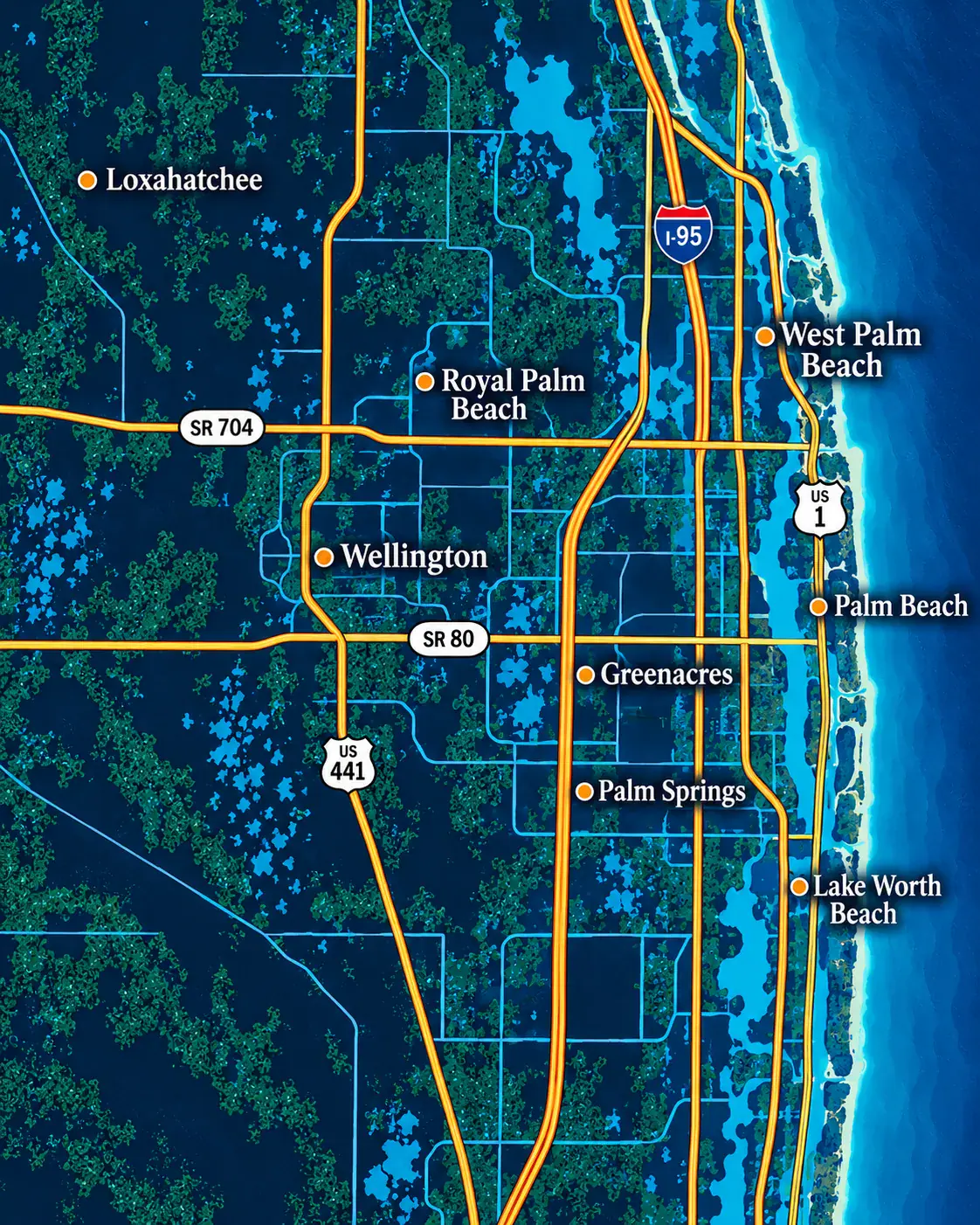
Central Palm Beach County SEO map showing West Palm Beach, Palm Beach, Wellington, Royal Palm Beach, Greenacres, Palm Springs, Lake Worth Beach and Loxahatchee

Central Palm Beach County

Central Palm Beach County is the heart of the county, stretching from West Palm Beach south to Lantana and Manalapan and west toward the equestrian and rural communities. We use those differences to improve local exposure, organic rankings, and the chances that new customers discover a business when they are ready to act.

A search near Clematis Street or the downtown business district may favor proximity, professional expertise, parking, or immediate availability. Farther west, the same service can involve equestrian properties, larger lots, gated neighborhoods, agriculture, or a wider travel radius. The communities between them add established neighborhoods, local businesses, multilingual households, and busy commercial corridors.

We research the terms people use, the results Google already favors, and the pages receiving impressions before deciding what to change. That local context helps us strengthen the right service and location relationships without forcing very different central-county audiences onto one generic page.

Key Business Communities

West Palm Beach Wellington Lake Worth Beach Royal Palm Beach Greenacres Palm Beach Palm Springs Loxahatchee Groves

Additional Palm Beach County service areas: Lantana · Mangonia Park · South Palm Beach.

North Palm Beach County SEO map showing Tequesta, Jupiter, Juno Beach, Palm Beach Gardens, North Palm Beach, Lake Park and Riviera Beach

North Palm Beach County

Want to reach more people locally in North Palm Beach County, from Tequesta south to Riviera Beach? We build organic search visibility around the way customers actually look for products and services in this part of the county—not around a copied list of city names.

That distinction matters here. Someone searching for a marine business near Jupiter may use the inlet, waterfront community, or specific service in the query. A homeowner in Palm Beach Gardens may search by neighborhood, property need, or urgency. Professional and healthcare searches often extend beyond one city because customers will travel for the right expertise. We determine which searches need a focused city page, which belong on a stronger county or service page, and how those pages should support one another.

Because we know the northern Palm Beach County corridor, we can connect the website to recognizable communities, roads, commercial centers, and real service patterns. The result is a strategy designed to attract qualified local traffic and help the right customers understand that the business truly serves their area.

Key Business Communities

Palm Beach Gardens Jupiter Riviera Beach North Palm Beach Lake Park Juno Beach Tequesta

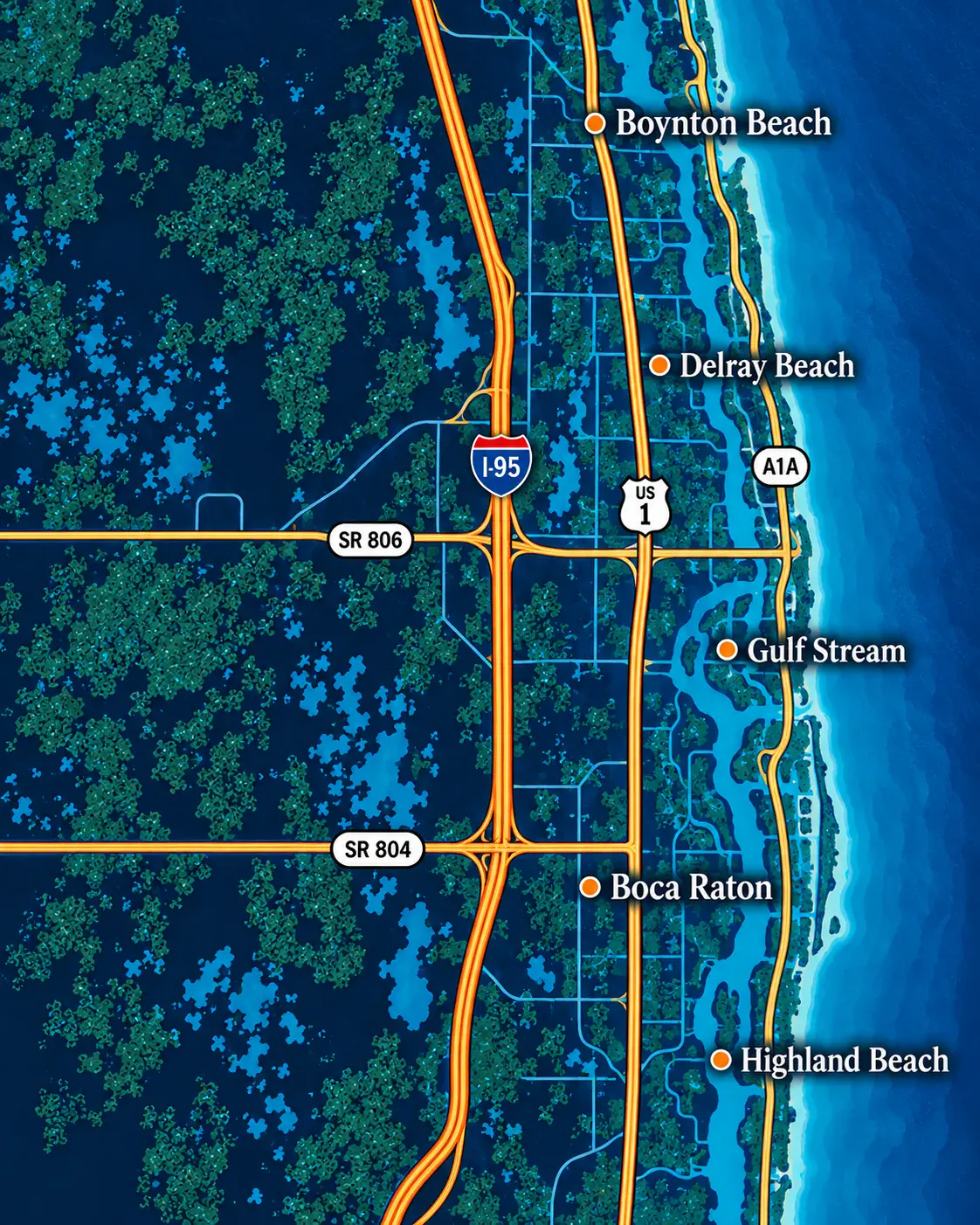
South Palm Beach County SEO map showing Boynton Beach, Delray Beach, Boca Raton, Gulf Stream and Highland Beach

South Palm Beach County

Businesses from Boynton Beach south to Boca Raton compete in some of the busiest organic search results in Palm Beach County. Searches around Glades Road, Atlantic Avenue, Federal Highway, A1A, and the surrounding neighborhoods can look similar on the surface, but the customer, competition, and reason for searching may be completely different.

The area combines established professional firms, healthcare, corporate services, active downtowns, hospitality, residential communities, coastal properties, and continued development farther west. Those audiences do not all use the same terms or expect the same proof from a business.

We build the strategy around those real differences. That means targeting the local search queries worth competing for, improving the pages most capable of ranking, and giving customers useful reasons to choose the business—not simply repeating city names throughout the website.

Key Business Communities

Boca Raton Delray Beach Boynton Beach Highland Beach Gulf Stream Briny Breezes

Broward County SEO map showing Fort Lauderdale, Hollywood, Pompano Beach, Deerfield Beach, Coral Springs, Sunrise, Plantation, Weston, Davie, Pembroke Pines and Miramar

Broward County

A well-executed local SEO strategy can help Broward County businesses build organic visibility across highly populated markets such as Fort Lauderdale, Hollywood, Pembroke Pines, Miramar, Sunrise, Pompano Beach, Coral Springs, Plantation, and Deerfield Beach. The opportunity is large, but so is the competition—and one county-wide phrase is rarely enough to reach every valuable customer.

Fort Lauderdale searches are influenced by its downtown, beaches, airport, port, marine industry, hospitality, and professional business community. Western Broward has different residential patterns, commercial centers, schools, medical offices, and service needs. Hollywood and Hallandale Beach connect closely with Miami-Dade, while Deerfield Beach and northern Broward overlap with southern Palm Beach County. Even nearby cities can show different competitors and search results.

We determine which services have county-wide demand, which searches are tied to a particular city, and where a business can realistically earn visibility. Then we strengthen the website structure, content, local signals, and internal links so potential customers find a page that actually answers what they searched for.

Key Business Communities

Fort Lauderdale Hollywood Pompano Beach Pembroke Pines Miramar Coral Springs Sunrise Plantation Deerfield Beach Davie Weston Hallandale Beach Coconut Creek Margate Tamarac Oakland Park Wilton Manors Lauderdale-by-the-Sea

Martin County SEO map showing Stuart, Palm City, Jensen Beach, Sewall’s Point, Port Salerno, Hobe Sound and Jupiter Island

Martin County

We provide local SEO for Martin County businesses serving the area from Jensen Beach south to Hobe Sound and Jupiter Island. The goal is not to scatter city names across the website. It is to make the business visible for the products or services people in Martin County are actually searching for.

Stuart is the county’s commercial center, but searches also follow the coast, waterways, residential communities, medical corridors, marinas, and the connections between Martin County, the Treasure Coast, and northern Palm Beach County. A marine service near the coast, a professional office in Stuart, and a company serving western properties do not share the same audience or practical service area.

We identify where customers are located, how far they will travel, which communities produce qualified inquiries, and whether the strongest opportunity is a city, county, or service-led search. That keeps the strategy useful, accurate, and focused on visibility that can turn into business.

Key Business Communities

Stuart Palm City Jensen Beach Hobe Sound Port Salerno Indiantown Sewall’s Point Jupiter Island

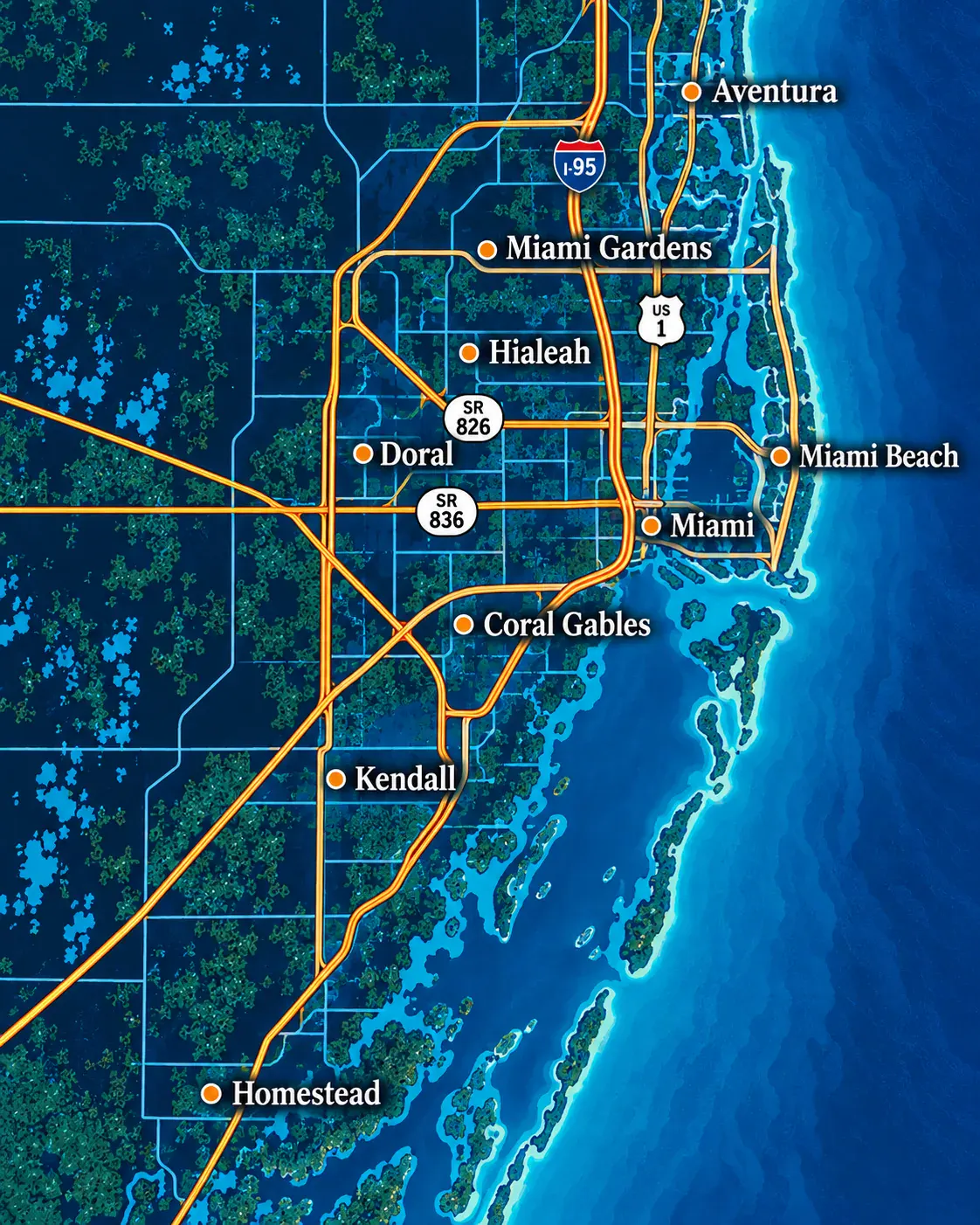
Miami-Dade County SEO map showing Miami, Miami Beach, Aventura, Miami Gardens, Hialeah, Doral, Coral Gables, Kendall and Homestead

Miami-Dade County

Miami-Dade County is far too large and varied for a generic “Miami SEO” approach. A company trying to reach customers in Brickell, Doral, Coral Gables, Miami Beach, Hialeah, Aventura, Kendall, or Homestead is competing in distinct search environments with different language, industries, travel patterns, and expectations.

Downtown Miami and Brickell concentrate finance, law, real estate, hospitality, and professional services. Doral, Medley, and the airport corridor are important for logistics, trade, warehouses, offices, and companies serving international markets. Coral Gables, Aventura, Miami Beach, Hialeah, Kendall, Pinecrest, and Homestead each carry their own local meaning. English and Spanish search behavior may overlap, but a direct translation does not automatically match the way a customer asks for a service.

We look at the actual search results, competition, language, location signals, and customer journey before recommending pages or keywords. That is how we decide when the broader Miami name helps, when a city or community deserves its own focus, and how to build visibility without creating a website full of interchangeable location pages.

Key Business Communities

Miami Doral Hialeah Miami Beach Coral Gables Aventura Miami Gardens Kendall Homestead North Miami North Miami Beach Miami Lakes Medley Cutler Bay Palmetto Bay Pinecrest South Miami Sweetwater Florida City

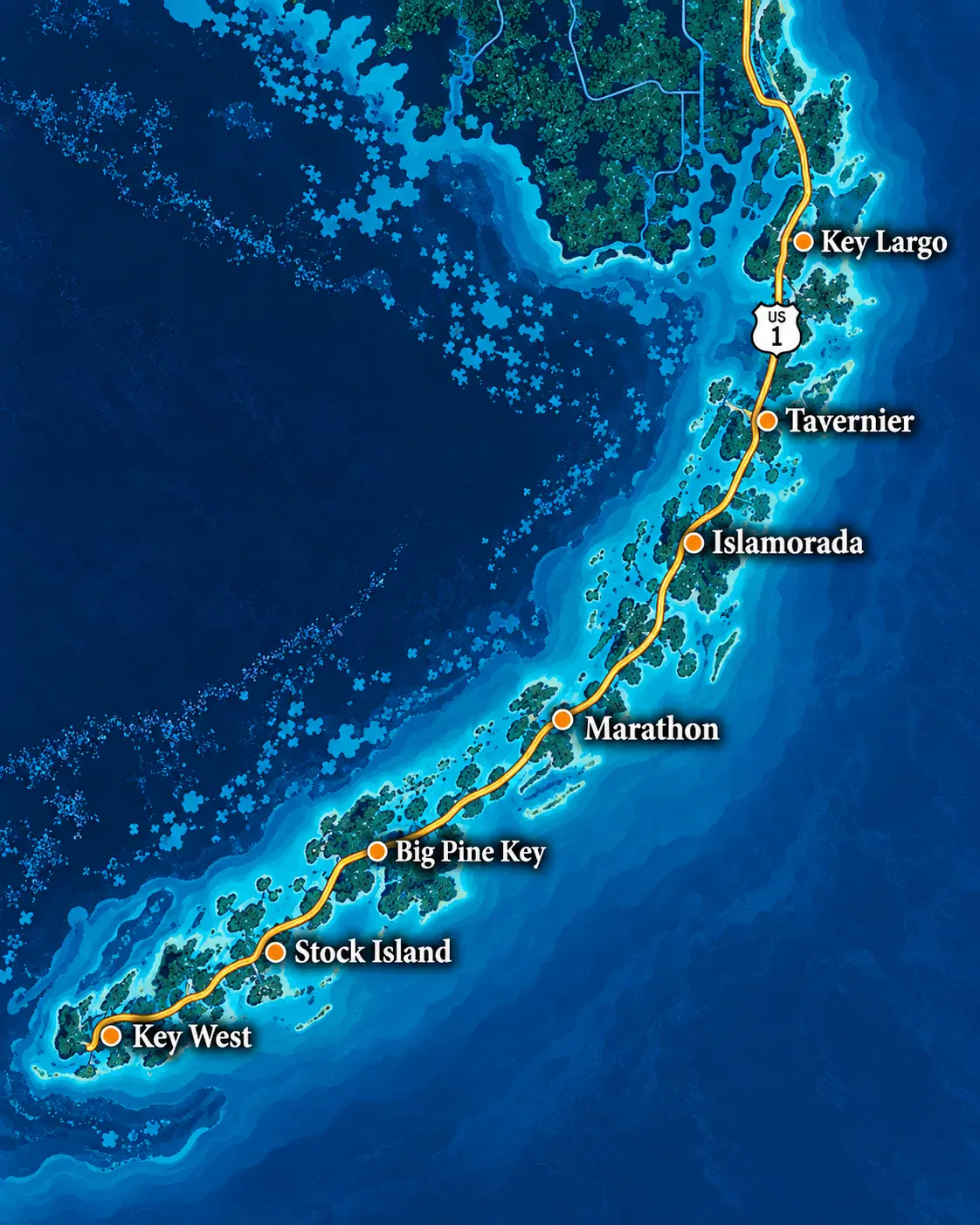
Monroe County SEO map showing Key Largo, Tavernier, Islamorada, Marathon, Big Pine Key, Stock Island and Key West

Monroe County & Florida Keys

Local search in Monroe County follows the Florida Keys, not a conventional mainland service area. The major clusters around Key Largo and Tavernier, Islamorada, Marathon, and Key West are connected by the Overseas Highway, but distance, bridges, island identity, and the availability of local providers change how people search and whom they are willing to contact.

The Upper Keys, Middle Keys, and Key West support different combinations of tourism, hospitality, restaurants, marine businesses, historic properties, local government, professional services, and year-round residents. A business may serve one cluster, several islands, or the full Keys—but the website has to explain that coverage honestly and clearly.

We build the strategy around the areas the business can actually serve, the seasonal and year-round customers it wants to reach, and the terms people use for that part of the Keys. This makes the location content more useful to customers and gives search engines a credible reason to connect the business with those communities.

Key Business Communities

Key West Key Largo Marathon Islamorada Tavernier Stock Island Big Pine Key Duck Key Layton

SOUTH FLORIDA SEO QUESTIONS

SoFlo SEO FAQ

These answers explain how we use firsthand regional knowledge, search data, real business evidence, and sound website structure to improve organic and local visibility across South Florida.

LOCAL CONTEXT SHOULD GUIDE THE WORK

Useful regional targeting is based on genuine service relationships and market differences, not a mechanically generated list of city pages.

CLEAR ANSWERS FOR SOUTH FLORIDA BUSINESSES

SoFlo is a familiar shorthand for South Florida. SoFlo SEO is what we call our locally informed approach to organic search for the region’s real cities, communities, customers, and business conditions. It combines traditional SEO with the context that changes from Martin County through Palm Beach County and Broward County—including service radius, search language, demographics, coastal and inland patterns, commercial corridors, and local competition. It is not a generic statewide or national template or a collection of duplicated city pages.

SoFloWeb is based in South Florida and understands Palm Beach County, Broward County, Miami-Dade County, Martin County, the Florida Keys, the Treasure Coast, and communities throughout Florida. That familiarity includes coastal cities, downtown districts, suburban communities, western and rural areas, commercial corridors, industrial markets, tourism centers, and the roads and regional relationships that connect them. This resource concentrates on the primary South Florida markets shown above, but the correct search territory always depends on where the business operates, where its customers are, and how people describe that part of Florida.

No. A city page should exist only when the location represents a meaningful market, distinct search need, real service relationship, and enough useful information to deserve a dedicated page. Before adding one, we review the existing pages, Search Console data, search results, competition, and the business’s actual coverage. Thin pages that merely exchange place names can create duplication, divide authority, and fail to help customers.

Demographics can influence the services people seek, the language they use, the proof they expect, seasonal demand, property needs, travel behavior, and purchasing decisions. They are context for research and messaging, not a reason to make assumptions about every individual.

Consumers often weigh proximity, availability, reviews, urgency, property type, and local familiarity. A professional-service buyer may search by specialization, credentials, industry, commercial center, county, or regional reach and may travel farther for the right expertise. Each plan should follow the actual decision process rather than a fixed radius.

Yes. The strategy can clarify realistic coverage, prioritize the markets with the best fit, strengthen location context, and avoid overstating physical presence. Website pages and business-profile settings should accurately reflect how the company serves customers.

Local SEO is the broader practice of improving visibility for location-influenced searches. A geo-target page is one possible asset within that strategy, created to answer a genuine need associated with a city, county, region, or service area.

South Florida includes dense downtowns, coastal and island communities, western suburbs, equestrian and rural areas, tourism markets, ports, airports, industrial zones, seasonal residents, and multilingual audiences. Knowing how those areas connect makes it easier to choose accurate targets, recognize when a location claim feels false, write useful local context, and understand why the same search can produce different results only a few miles away.

AI answer engines and large language models rely on many of the same fundamentals that support traditional search: clear entities, direct answers, consistent business information, strong topic relationships, structured data, trustworthy sources, and visible experience. SoFloWeb organizes those signals so the business and its South Florida service relationships are easier to understand and reference, while keeping the primary strategy focused on organic visibility and qualified leads.

Measurement can include queries, impressions, clicks, landing pages, map visibility, calls, forms, qualified inquiries, and performance by market. Rankings provide context, but business outcomes determine whether visibility is useful.

LOCAL SEO STRATEGY

Let’s Discuss SEO for Your South Florida Business

Call or text to discuss where your best customers are, which services matter in each market, what the website already ranks for, and how a locally informed SEO strategy can improve visibility without risking useful pages or relying on generic city content.