01STEADY START
Microbusiness Momentum
Comfortable, sustainable search support for a one-location microbusiness.
- Search health monitoring
- Focused page refinement
- Steady content support

Select an available 45-minute window, then tell us how to reach you. We will confirm the appointment and send the Google Meet details after reviewing the request.
45-minute video call. Times shown are Eastern. At least one day’s notice is required. Faded blocks are unavailable.
Share the same project details requested on our homepage in two short steps. We will review the information and respond using the communication method you select.
Tell us what the business needs, what is changing, and which services you are considering. We will review the details before recommending the clearest practical next step.

Home / SEO Services
We connect the searches customers make with pages that deserve to be found. Our work combines research, technical improvements, content refinement, local visibility, and measurement—prioritized around qualified traffic and real business inquiries.
Technical access, page relevance, content quality, local discovery, business credibility, and the path from a search result to a qualified inquiry—all based on what the website and data show.
Monthly search engine optimization turns recommendations into continuing technical improvements, stronger pages, original content, local search support, and measured AIO, AEO, and GEO work. Preview the four levels of support, then compare the complete scope on the dedicated plans page.
Comfortable, sustainable search support for a one-location microbusiness.
A stronger search program for businesses ready to improve consistently.
Active publishing and optimization for established businesses building momentum.
The fullest level of implementation, content, measurement, and direct strategy.
Review the full deliverables, publishing pace, strategy cadence, local support, and AI-search considerations before choosing a level. Monthly plans begin with a separate one-time onboarding and setup engagement.
Good SEO begins with the business, not a list of disconnected tactics. We learn what you offer, who needs it, where you serve them, and which actions matter most. That context shapes the research, priorities, site structure, content, and measurement plan.
The goal is not to attract every possible visitor. It is to strengthen visibility for relevant searches and help qualified people understand why your business is a strong fit. This is where experience and judgment matter. SEO tools can surface data, and a standard playbook can produce a list of tasks, but neither can determine whether a recommendation fits the business, protects existing visibility, or deserves priority.
Every action should have a reason: what the search data shows, what customers need, how Google currently understands the website, and which business outcome the work is intended to improve. Repeatable processes can be useful, but only when they are guided by people who can interpret the context, question an automated recommendation, recognize risk, and adjust the strategy as search behavior and results change.
We do not make changes simply because a checklist says to. Clients receive clear research, priorities, explanations, and implementation from the people responsible for the work. Clear entities, useful answers, structured pages, and trustworthy supporting details can also help search engines and AI-driven answer experiences interpret the business. That work supports the broader organic strategy while this page remains focused on traditional SEO.
Search Console queries, customer questions, local phrasing, competitor results, and the difference between someone researching a topic and someone preparing to contact a provider.
Each important service, topic, or location needs one clear destination. We identify pages worth strengthening before recommending another URL that could divide relevance or compete with existing content.
We look for indexing problems, lost URLs, weak or duplicated content, unclear entities, poor internal links, inaccurate local information, slow templates, and previous changes that correspond with a decline.
Queries, impressions, clicks, landing pages, map visibility, calls, forms, and qualified leads show different parts of the story. Rankings matter, but business outcomes decide whether the work is useful.
Every website starts from a different position. We review what already ranks, what has been changed, which pages attract qualified traffic, where Google is confused, and what customers still cannot find or understand. The scope is based on that evidence—not a standard monthly checklist.
We examine crawling, indexation, architecture, canonicals, redirects, status codes, templates, page experience, mobile usability, structured data, XML sitemaps, and the technical changes most likely to affect important pages.
Search Console, keyword tools, live results, competitor pages, customer questions, and business priorities reveal the language people use and the intent behind it—not just estimated search volume.
Titles, descriptions, headings, copy, images, internal links, calls to action, and schema are improved together so the page answers the search clearly without forced keywords or vague filler.
Google Business Profile guidance, accurate business information, reviews, location and service relationships, locally useful pages, and map-result research help the business demonstrate where it operates and whom it serves.
Service pages, supporting resources, comparison and question content, content briefs, and updates are planned around a defined search need. Firsthand experience, process details, examples, and knowledgeable authorship make the content more useful and strengthen E-E-A-T.
Search Console and analytics data, query and landing-page trends, calls, forms, map visibility, and conversion tracking show what is improving, where visibility is slipping, and what deserves attention next.

People do not always search using the language a business uses internally. They describe problems, compare options, add locations, ask questions, and refine searches as they move closer to a decision. A useful SEO strategy studies that behavior and connects each meaningful search need with the most appropriate page. It also separates valuable opportunities from high-volume phrases that are unlikely to produce the right visitor.
During a redesign, migration, or major content change, existing URLs, inbound links, useful content, and established rankings must also be protected. We document what should remain, what should improve, and where redirects or consolidation may be necessary.
AI-assisted discovery extends this work rather than replacing it. Search engines and answer systems still need accessible pages, clear entities, original information, trustworthy evidence, and a website structure they can understand. Our AI search visibility services examine how those foundations are interpreted in generated answers without treating citations or mentions as guaranteed.
A phrase is evaluated by meaning, stage of decision, location, result type, competition, and likely business value. A lower-volume term can be the better target when it brings the right customer.
Important pages must be linked, indexable, technically consistent, and distinct enough to deserve their own result. Canonicals, redirects, parameters, and duplicate versions should reinforce—not contradict—the preferred page.
Navigation, breadcrumbs, service-to-location relationships, supporting resources, and contextual links show people, search engines, and AI systems which pages are central and how the business’s expertise fits together.
Each priority page should answer the search with useful depth, clear entities, direct language, firsthand experience, accurate business details, and evidence only that business can provide.
Mobile experience, speed, readable layouts, useful calls to action, working forms, phone links, and dependable tracking determine whether earned visibility can become a lead.
Relevant citations, genuine reviews, credentials, knowledgeable authors, project evidence, consistent business information, and transparent company details reinforce real-world credibility. We do not sell backlink packages, paid link placements, or link-outreach campaigns.
SEO is ongoing, but it should never feel vague. Each phase has a purpose, a set of decisions, and a way to evaluate what happens next.
We learn how the business earns a customer, review priority services and markets, document previous SEO or site changes, confirm access and tracking, and record the current organic baseline before altering anything.
Search Console, analytics, keyword and competitor tools, and manual Google searches show query patterns, intent, result features, content gaps, local competition, and opportunities worth pursuing.
We examine crawling, indexation, redirects, canonicals, templates, architecture, page quality, internal links, metadata, media, structured data, mobile performance, and tracking—then relate each finding to an affected page or goal.
Findings become a practical plan organized by risk, potential impact, urgency, effort, dependencies, and the condition of the website. The recommendation explains what should happen first and why.
Approved work is completed carefully and documented—from technical corrections and redirect work to page optimization, internal linking, schema, local improvements, and original content with real business evidence.
We monitor queries, clicks, landing pages, map visibility, calls, forms, and qualified leads. Changes are evaluated against the baseline so the next recommendation is based on evidence rather than activity for activity’s sake.
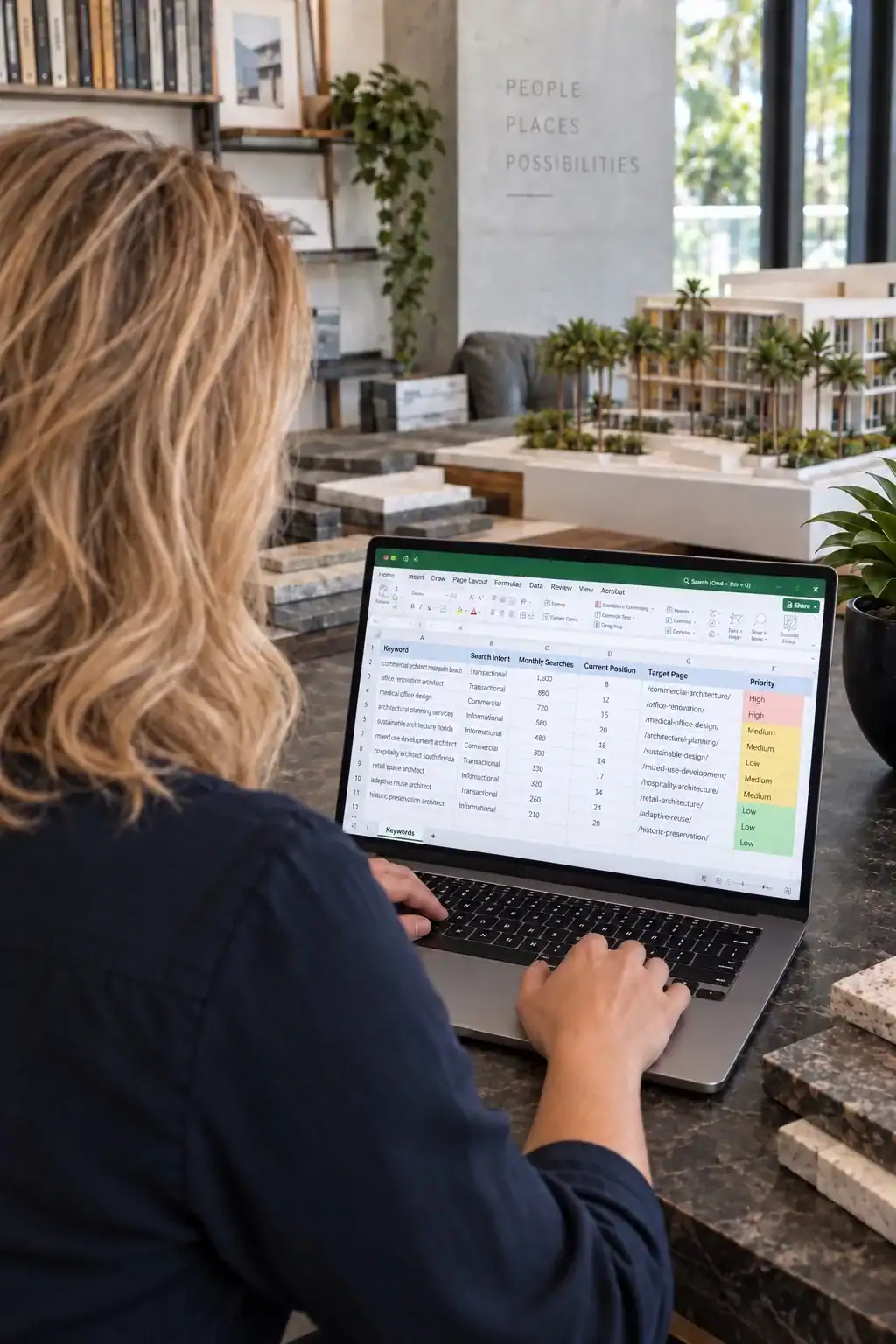
Clients work directly with the person who studies the data, explains the priorities, and completes the work.
SEO should give a business owner better information, not a stack of unexplained charts. We focus reporting on what changed, what the data suggests, where opportunities are developing, and what deserves attention next. We connect the search evidence with the website, the business, and the decisions already made together.
This accountability matters. Some businesses discover they have paid recurring fees while little meaningful work was completed. Clear implementation records and understandable reporting make it easier to see what was actually done and why it matters.
Visibility and traffic are reviewed alongside inquiries, calls, forms, and the quality of landing-page engagement.
Real query and page data identifies existing strengths, emerging topics, weak click-through rates, and pages losing ground.
Priorities include the reason for the work, the expected benefit, and any risk or dependency that should be considered.
No ethical SEO provider controls search results. We commit to careful work, transparent decisions, and measurable improvement.
An established website with useful content needs a different plan from a newly launched site or a business recovering from years of inconsistent optimization. Some websites need recovery before expansion because careless changes, unfinished work, or poor advice damaged visibility that had already been earned. The strategy should fit the evidence.
For websites already earning impressions and visits, the best opportunity may be to improve titles, content, internal links, local relevance, and conversion paths without disrupting valuable pages.
Pages are ranking within reach of stronger positions, established URLs have useful backlinks or engagement, and the structure is sound but optimization is uneven. This also fits pages already earning impressions that need stronger titles, content, internal links, or conversion paths.
Poor migrations, mass URL changes, weak rewrites, indexing mistakes, spam tactics, and careless optimization can erase established rankings and sharply reduce qualified leads. We trace the loss, separate likely causes from coincidence, and build a measured recovery plan before making more disruptive changes.
Organic traffic or leads declined after another provider, redesign, migration, unexplained site edits, or months of activity without clear implementation records. Recovery may also be appropriate when rankings fell after sitewide automation, aggressive rewriting, or poorly planned URL changes.
When important services, questions, industries, or locations are not represented adequately, research can guide new pages and supporting resources with a clear role.
The business is growing services or geographic reach, important topics lack a strong destination page, or the site is ready to build topical authority over time. This also fits research that reveals qualified searches no existing page answers clearly.

Local visibility depends on accurate business information, genuine service relationships, useful location context, customer reviews, and an understanding of how people in the area describe what they need.
Search behavior is not uniform across Palm Beach County, Broward County, Miami-Dade, Martin County, and the Treasure Coast. People combine services with city names, neighborhoods, “near me” language, landmarks, and specific problems. We compare those patterns with actual coverage, Search Console data, map results, and the website’s existing authority to decide which locations deserve dedicated content, which signals belong on core service pages, and how the Google Business Profile should support the website.
Local SEO is not limited to inserting city names into a page. Search engines compare the website, business profile, reviews, location relevance, service information, and other signals to decide which businesses may best answer a local need.
We help businesses present those signals clearly and consistently through Google Business Profile guidance, service-area planning, local page strategy, review and citation recommendations, and stronger connections between the website and each real-world market served.
For businesses serving multiple South Florida markets, this becomes what we call SoFlo SEO—our geo-targeted search engine optimization approach. It combines search data with firsthand knowledge of how the region’s counties, cities, neighborhoods, industries, and customer patterns differ, so location targeting reflects real markets rather than a mechanically generated list of nearly identical city pages.
Clear answers are part of a good SEO relationship. These are some of the questions businesses ask most often before starting organic search work.
The answers below explain how we evaluate scope, protect useful search equity, measure progress, and connect traditional SEO with local and AI-driven discovery.
The scope depends on the website and goals. Work may include technical SEO, keyword and intent research, on-page optimization, local SEO, content planning and improvement, internal linking, structured data, Search Console and analytics review, conversion tracking, and ongoing strategy. SoFloWeb recommends the mix that fits the evidence rather than forcing every client into the same package.
Some technical corrections and page improvements can affect crawling, indexing, or click-through rates relatively quickly. Meaningful growth in competitive search results usually takes sustained work over months. Timing depends on the condition and age of the site, competition, content quality, authority, implementation speed, and the searches being targeted.
No. Search engines control their results, competitors continue improving, and algorithms change. A responsible SEO provider can research carefully, follow sound practices, improve the website, measure performance, and make informed adjustments. Guaranteed positions are not a credible promise.
Yes. Local work can include website optimization, Google Business Profile guidance, service and location page planning, consistent business information, review strategy, and stronger local relevance. The approach depends on whether customers visit a location, the business travels to customers, or the company serves multiple markets.
Not necessarily. Useful existing content may only need clearer structure, stronger alignment with search intent, better internal links, updated details, or more complete answers. SoFloWeb preserves what already works and recommends new writing where the site has a real gap.
SEO improves a website’s ability to earn visibility in unpaid search results. Paid search places ads through an advertising platform and charges for campaign activity. The two can support each other, but they use different methods, costs, timelines, and measurement models.
The same fundamentals that support search visibility—clear entities, strong topical coverage, direct answers, trustworthy information, structured content, and sound technical implementation—can also help answer engines interpret a site. SoFloWeb considers those needs within SEO, while specialized AI-answer strategy is addressed separately when it is the primary goal.
Yes. SEO should be involved before launch. SoFloWeb reviews valuable URLs, content, internal links, metadata, inbound-link destinations, analytics, and Search Console data; maps redirects where needed; and checks the launched site for crawling, indexation, and tracking problems.
Yes. Recovery begins by identifying when the decline started and what changed around that time. SoFloWeb reviews Search Console and analytics trends, indexing, redirects, content changes, technical signals, inbound-link destinations, and previous provider activity. The goal is to correct evidence-based causes carefully without creating another round of unnecessary disruption.
Measurement may include search impressions, clicks, query positions, local visibility, landing-page engagement, calls, forms, and other meaningful actions. Rankings are useful context, but they are not the only measure of success.
Google reviews about our search visibility work, SEO expertise, and support for business growth.
We had the best experience working with SoFloWeb. They completely transformed our website, and because of their expertise we’re now showing up on Google search — what a huge difference it has made for our business! From start to finish, they were professional, responsive, and truly amazing to work with. Highly recommend them to anyone looking to elevate their online presence.
We had been searching for a website developer for quite some time and could not be happier. They explained every aspect of the process, which is very much appreciated since we aren’t very tech savvy. The thing we love most is that they are local, there is no outsourcing, and they always respond in a timely manner. Our business has increased since we hired them.
One of the best there is for SEO and website design and consulting!
SoFloWeb recently helped me organize my website. They were prompt, professional, and easy to work with. I am beyond happy with the results!
Call or text to discuss what you want organic search to accomplish, where visibility is falling short, and what has already been tried.
Choose a plan and share the website details. We will review the request and confirm the final scope before billing begins.
Your monthly search visibility request has been sent. We will review the website and contact you before any billing begins.