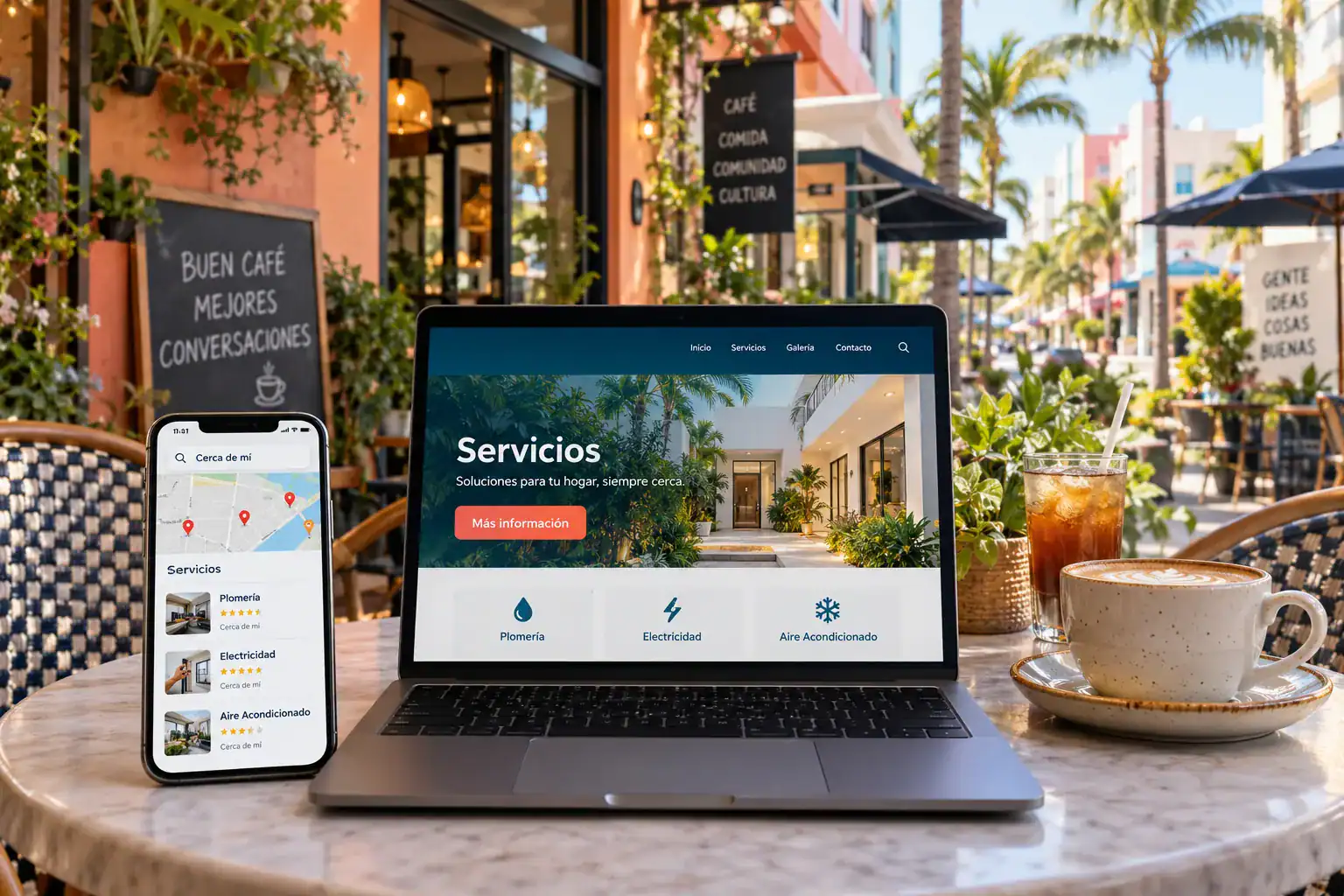
People who search in Spanish are not simply English-language searchers viewing translated words. They may describe the same need differently, use regional terminology, ask different questions or require more explanation before choosing a provider. A business that researches those searches can compete for an audience its English pages may never reach. Start with one service. In Google Search Console, filter to its page and read the Spanish queries. Then set the language and location in Keyword Planner and compare those phrases with the words customers use on calls. A search for
reparación de aire acondicionado cerca de mí suggests someone wants a nearby technician. A search beginning
cuánto cuesta asks about price. Those visitors need different answers, even when they land on the same page.
Spanish SEO in the U.S. and Spain
Spanish describes a language. Spain describes a market. A Miami auto shop might hear
carro or
auto where a shop in Madrid hears
coche. Check the words customers use in your service area before choosing a page title. A business serving Spain should also check which language customers use locally, particularly in areas where Catalan, Galician or Basque is spoken. Spanish-speaking employees can contribute valuable customer insight when they are available, but they are one research source rather than the subject of the strategy. Search-query data, calls, forms, customer interviews, sales conversations and competitor research can also reveal what Spanish-speaking customers need. The goal is to help people compare providers and decide what to do next in Spanish.
The research should identify:
- Which services generate the most Spanish-language questions
- How potential customers describe their problems in searches and conversations
- Which explanations are difficult to understand in English
- Which regional terms and search phrases customers use
- What causes hesitation or mistrust
- Which documents, prices or steps need clearer explanation
- Whether the intended audience searches only in Spanish or moves between Spanish and English
- Which locations, services and questions show enough demand to justify dedicated pages
- Which promises and services the company can realistically fulfill in Spanish
People who search in Spanish are not simply English-language searchers viewing translated words. They may describe the same need differently, use regional terminology, ask different questions or require more explanation before choosing a provider. A business that researches those searches can compete for an audience its English pages may never reach. Spanish-speaking employees can contribute valuable customer insight when they are available, but they are one research source rather than the subject of the strategy. Search-query data, calls, forms, customer interviews, sales conversations and competitor research can also reveal what Spanish-speaking customers need. The goal is to help people compare providers and decide what to do next in Spanish.
The research should identify:
- Which services generate the most Spanish-language questions
- How potential customers describe their problems in searches and conversations
- Which explanations are difficult to understand in English
- Which regional terms and search phrases customers use
- What causes hesitation or mistrust
- Which documents, prices or steps need clearer explanation
- Whether the intended audience searches only in Spanish or moves between Spanish and English
- Which locations, services and questions show enough demand to justify dedicated pages
- Which promises and services the company can realistically fulfill in Spanish
People who search in Spanish are not simply English-language searchers viewing translated words. They may describe the same need differently, use regional terminology, ask different questions or require more explanation before choosing a provider. A business that researches those searches can compete for an audience its English pages may never reach. Start with one service. In Google Search Console, filter to its page and read the Spanish queries. Then set the language and location in Keyword Planner and compare those phrases with the words customers use on calls. A search for
reparación de aire acondicionado cerca de mí suggests someone wants a nearby technician. A search beginning
cuánto cuesta asks about price. Those visitors need different answers, even when they land on the same page.
Spanish SEO in the U.S. and Spain
Spanish describes a language. Spain describes a market. A Miami auto shop might hear
carro or
auto where a shop in Madrid hears
coche. Check the words customers use in your service area before choosing a page title. A business serving Spain should also check which language customers use locally, particularly in areas where Catalan, Galician or Basque is spoken. Spanish-speaking employees can contribute valuable customer insight when they are available, but they are one research source rather than the subject of the strategy. Search-query data, calls, forms, customer interviews, sales conversations and competitor research can also reveal what Spanish-speaking customers need. The goal is to create useful pages for people who prefer to find information, compare providers and make decisions in Spanish.
The research should identify:
- Which services generate the most Spanish-language questions
- How potential customers describe their problems in searches and conversations
- Which explanations are difficult to understand in English
- Which regional terms and search phrases customers use
- What causes hesitation or mistrust
- Which documents, prices or steps need clearer explanation
- Whether the intended audience searches only in Spanish or moves between Spanish and English
- Which locations, services and questions show enough demand to justify dedicated pages
- Which promises and services the company can realistically fulfill in Spanish
People who search in Spanish are not simply English-language searchers viewing translated words. They may describe the same need differently, use regional terminology, ask different questions or require more explanation before choosing a provider. A business that researches those searches can compete for an audience its English pages may never reach. Spanish-speaking employees can contribute valuable customer insight when they are available, but they are one research source rather than the subject of the strategy. Search-query data, calls, forms, customer interviews, sales conversations and competitor research can also reveal what Spanish-speaking customers need. The goal is to create useful pages for people who prefer to find information, compare providers and make decisions in Spanish.
The research should identify:
- Which services generate the most Spanish-language questions
- How potential customers describe their problems in searches and conversations
- Which explanations are difficult to understand in English
- Which regional terms and search phrases customers use
- What causes hesitation or mistrust
- Which documents, prices or steps need clearer explanation
- Whether the intended audience searches only in Spanish or moves between Spanish and English
- Which locations, services and questions show enough demand to justify dedicated pages
- Which promises and services the company can realistically fulfill in Spanish