VIDEO CALL REQUEST

Choose a Time to Talk

Select an available 45-minute window, then tell us how to reach you. We will confirm the appointment and send the Google Meet details after reviewing the request.

45-minute video call. Times shown are Eastern. At least one day’s notice is required. Faded blocks are unavailable.

START A CONVERSATION

Tell Us What the Business Needs

Share the same project details requested on our homepage in two short steps. We will review the information and respond using the communication method you select.

ABOUT 2 MINUTESTwo focused steps
NO OBLIGATIONA practical first conversation
PERSONALIZED RESPONSEBased on the business and its goals
QUOTE & PROJECT DETAILS

Request a Website & Marketing Proposal

Tell us what the business needs, what is changing, and which services you are considering. We will review the details before recommending the most useful next step.

FOUR FOCUSED STEPSAbout 3 minutes
NO OBLIGATIONClear guidance without pressure
PERSONALIZED REVIEWBased on the business and its goals
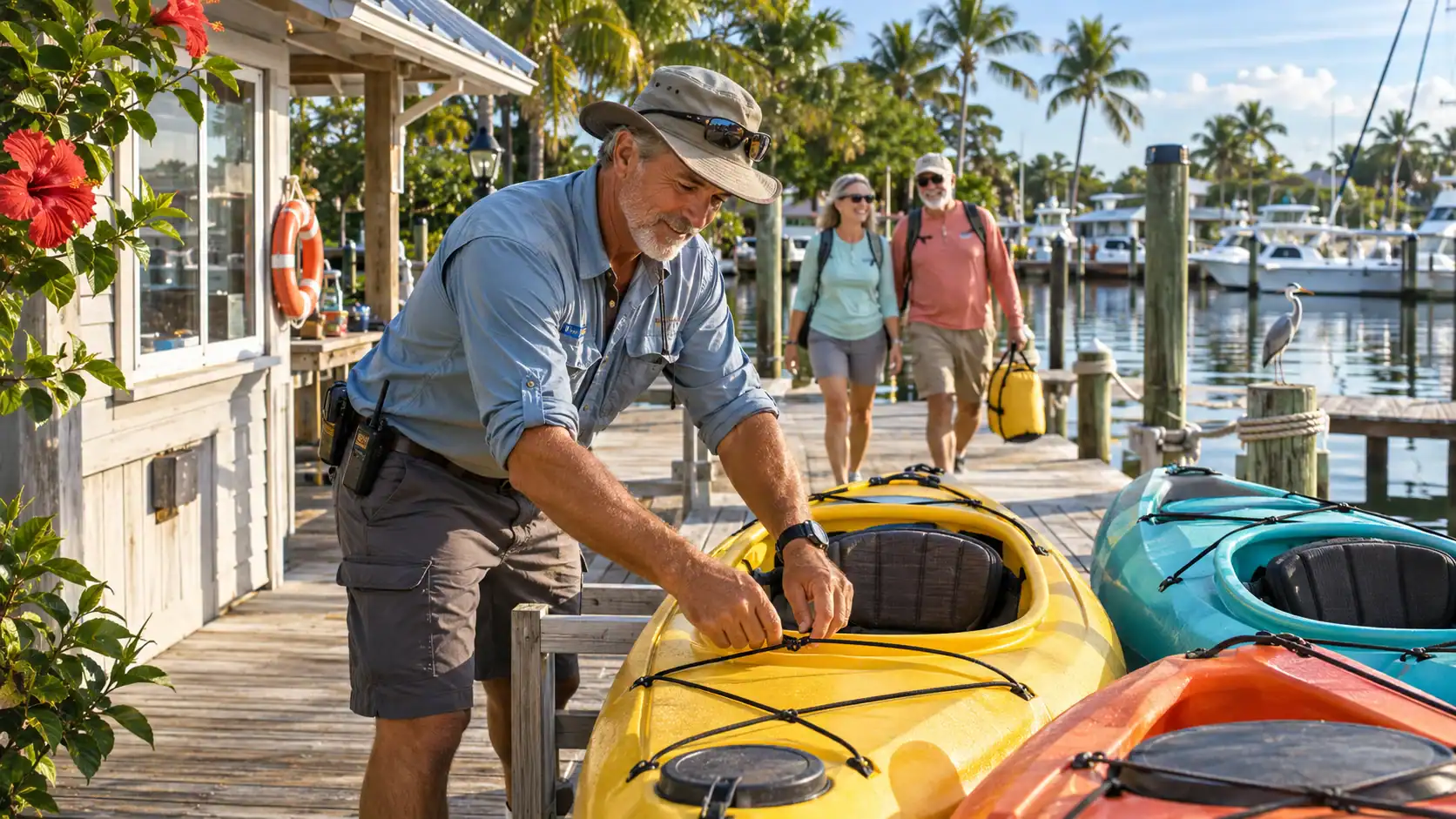
Marina operator preparing rental kayaks for seasonal visitors

Home   /   Digital Trends   /   Florida Snowbird Marketing

FLORIDA SEASONAL VISITORS + LOCAL DEMAND

Florida Snowbird Marketing
for Seasonal Visitors

Seasonal residents and visitors research Florida businesses before arrival and throughout their stay. Preparation determines who they find.

THE SHORT ANSWER

Seasonal Marketing Works Best Before Florida Visitors Arrive

Florida businesses can reach more snowbirds and seasonal visitors by preparing their websites and marketing before those customers arrive, creating pages that answer location-specific questions, strengthening Google Maps visibility, making mobile calls and bookings easy, and separating long-stay seasonal residents from short-stay vacationers in their campaigns.

The best opportunity is not limited to hotels, attractions and restaurants. Seasonal demand can also benefit healthcare and wellness providers, home and property service companies, real estate and home-improvement businesses, equestrian companies and the businesses serving horse communities, financial and legal professionals, and premium recreation or hospitality companies.

The important word is fit. A business should pursue seasonal customers when it can serve them well, respond quickly and turn the temporary population increase into profitable work—not simply because winter traffic is coming.

💡

Florida season starts before visitors cross the state line. People research doctors, property services, reservations, activities and major purchases before they arrive. If the website work begins only after demand peaks, the business may spend its most valuable weeks trying to become visible.

Florida's seasonal opportunity is larger than the snowbird audience

“Snowbird” usually describes someone who spends an extended part of the colder months in Florida while maintaining a primary home elsewhere. Some own a second home. Others rent for several weeks or months. They may return to the same community for years and develop ongoing relationships with local businesses.

Vacationers are a different audience. They may stay for a weekend, a week or several weeks. Their decisions are often more immediate, their searches are highly mobile and their tolerance for unclear hours, slow responses or complicated booking is low.

This distinction matters because one generic “winter visitors” campaign will not match every need.

VISIT FLORIDA Research reports that the state received a revised 143.33 million visitors in 2025, followed by an estimated 39.88 million visitors in the first quarter of 2026. Those visitor figures do not include Florida residents. The state also reported that out-of-state visitors spent $134.9 billion in Florida during 2024. See VISIT FLORIDA’s updated visitor estimates and 2024 tourism economic-impact findings.

Snowbirds are harder to count precisely because population estimates generally measure permanent residents, not temporary populations. A Florida Revenue Estimating Conference analysis estimated approximately 1.05 million snowbirds age 55 and older staying in owned or rented accommodations at the winter peak in fiscal year 2021–22. That figure was an estimate based partly on older seasonal-migration research updated with state population data, so it should not be treated as a current headcount. It does, however, illustrate why permanent-resident totals can substantially understate the number of people physically present in some Florida communities during season. See the state’s Revenue Estimating Conference analysis.

The marketing lesson is more important than any single statewide total: many Florida markets have a temporarily expanded customer base, and part of that audience has both immediate needs and repeat potential.

Florida businesses may also serve:

  • People visiting seasonal residents, including adult children and grandchildren
  • International travelers
  • Part-time residents who do not call themselves snowbirds
  • Business travelers and convention guests
  • Riders, owners, trainers, grooms, veterinarians, sponsors and spectators arriving for Florida’s winter equestrian season
  • Boaters, anglers, golfers, racquet-sport players, baseball fans, art collectors and other visitors planning trips around seasonal interests or events
  • Owners preparing a second home before arrival or closing it after departure
  • New residents testing an area before a future move

Snowbirds and vacationers do not search the same way

The person spending four months in a Florida condominium behaves differently from the family visiting for five days.

CustomerTypical planning windowCommon needsWhat the website must establish
Returning seasonal residentWeeks or months before arrival through the full seasonOngoing care, home preparation, maintenance, professional services and trusted local relationshipsContinuity, credentials, service area, scheduling, records or account process and year-to-year reliability
First-time seasonal residentBefore arrival and during the first weeks in FloridaLocal orientation, provider comparisons, second-home support and new service relationshipsClear explanations, local proof, reviews, useful FAQs and low-friction contact
Short-stay vacationerBefore the trip through the day of purchaseReservations, experiences, transportation, dining, convenience and urgent needsMobile speed, availability, accurate hours, location, pricing context and immediate booking
Visitor staying with familyOften during the tripActivities, wellness, dining, gifts, transportation and family-friendly optionsWho the service is for, group suitability, accessibility, directions and availability
Absentee property ownerThroughout the year, especially before arrival and after departureInspections, repairs, security, maintenance and project oversightTrust, documentation, remote communication, proof of work and emergency process
Seasonal equestrian customerBefore horses arrive through the full competition seasonHorse care, farm services, housing, transportation, professional support and local conveniencesEquestrian knowledge, exact service boundaries, scheduling capacity, credentials and an understanding of competition calendars
Sports hobby or event travelerBefore tickets or travel are booked through the event or activity datesEquipment, instruction, reservations, transportation, recovery, dining and related experiencesCurrent dates, proximity, availability, specialized knowledge and a fast booking path

A visitor may search “things to do near me tonight.” A seasonal homeowner may search “property manager for second home in Boca Raton” months before returning. A winter resident may ask an AI assistant how to continue physical therapy, find a dentist, update an estate plan or prepare a condominium for an extended absence.

The business needs content and campaigns that match the decision—not a page that repeats “Florida snowbird specials” regardless of the service.

Which Florida businesses benefit most from seasonal residents and visitors

Many businesses notice seasonal traffic. Fewer have the customer value, recurring need and operational capacity to justify a serious seasonal marketing investment. The following categories offer particularly strong opportunities when the service, location and business model align.

Healthcare and wellness providers

Seasonal residents do not stop needing healthcare when they change states. They may need routine dental care, vision services, hearing care, physical therapy, dermatology, diagnostic services, mobility support or ongoing treatment coordination. Others use an extended Florida stay to schedule elective, aesthetic or wellness services.

The opportunity is not to market every provider as an emergency substitute. It is to show a seasonal patient exactly how care will work.

Pages should never promise that a particular treatment, prescription, insurance outcome or medical result will apply to everyone. Healthcare content requires qualified review, accurate credentials and careful privacy practices. Forms should request only the information needed for the stated next step, and practices subject to HIPAA should confirm that their vendors and workflows are appropriate for protected health information.

This category can be valuable because a successful first appointment may lead to several months of care and a relationship that resumes each season. Trust and continuity are more persuasive than a generic seasonal discount.

Useful website information may include:

  • Whether the practice accepts seasonal patients
  • Which insurance plans are accepted and what must be confirmed directly
  • How records can be requested or shared
  • Whether the practice coordinates with an established provider in another state
  • Appointment availability and realistic response expectations
  • Accessibility, parking and transportation information
  • The credentials of the treating professionals
  • Which services require an in-person evaluation
  • What to do in a true emergency

Home and second-home service companies

Seasonal homeowners create demand before they arrive, while they are in Florida and after they leave.

High-value opportunities can include property management, home watch, HVAC, plumbing, electrical work, pool care, pest control, cleaning, landscaping, security systems, smart-home support and storm preparation. The strongest prospects are often services that solve the anxiety of owning a property from hundreds or thousands of miles away.

Original photographs, sample reports with private information removed, team information and a clearly explained process can carry more weight than broad claims about reliability.

Avoid pretending to maintain staffed locations across an entire region. A service-area business should accurately represent where it operates and what response time it can deliver. Google explains that local results are mainly influenced by relevance, distance and prominence; adding a list of cities to a profile or footer does not make a company equally competitive everywhere.

A website serving absentee owners should answer practical trust questions:

  • Which communities and property types are served?
  • Is the company licensed or insured where applicable?
  • How are visits documented?
  • Will the owner receive photographs, reports or service records?
  • Who can authorize a repair?
  • How are keys, access codes and alarm information protected?
  • What happens when a problem is discovered?
  • Is after-hours or storm-related support available?
  • Can the company coordinate with condominium associations or other vendors?

Real estate and home improvement companies

Seasonal residents and repeat visitors may eventually buy, sell, renovate or furnish Florida property. That creates opportunities for established real estate brokerages, buyer representatives, luxury agents, remodelers, interior designers, outdoor-living specialists and selected construction trades.

These are considered purchases. The customer may research for months, involve family members in another state and compare several firms before making contact. The website should support that process with substance.

Real estate and development content should be precise about representation, availability and legal limitations. A page should educate without acting as individualized legal, tax or financial advice.

The marketing advantage comes from becoming useful before the person is ready to request a proposal. A thin “snowbird home renovation” page is less persuasive than a detailed resource explaining how a long-distance Florida renovation is planned, approved, documented and completed.

Strong content can explain:

  • The differences among local neighborhoods and property types
  • Condominium rules, association coordination and project restrictions
  • How remote consultations and project updates work
  • Realistic project phases and decision points
  • Which services the company performs directly and which require partners
  • Local licensing, permitting and insurance considerations
  • Before-and-after work with permission and meaningful context
  • How the team protects an occupied or unattended property

Equestrian businesses and businesses serving horse communities

Palm Beach County has an additional seasonal population that a conventional snowbird-and-tourism article can easily miss: the riders, horse owners, trainers, grooms, veterinarians, support teams, sponsors and spectators who arrive for the winter equestrian circuit.

This is especially important in Wellington, Loxahatchee Groves and the western communities. Palm Beach County’s fiscal year 2023–24 annual report attributed a $403.6 million economic impact to the Winter Equestrian Festival, including $296.7 million spent on horse-related needs and an estimated 3,792 jobs. See the county’s fiscal year 2023–24 annual report. The Village of Wellington also describes a community with more than 580 farms and nearly 13,000 horses during peak season.

Those figures explain why equestrian season affects far more than showgrounds. It can create valuable demand for two connected groups of businesses.

The first group serves horses, farms and competitors directly. Depending on qualifications and local demand, that can include:

The second group serves the people who temporarily live, work and spend in the surrounding community. Higher-value opportunities may exist for furnished housing, luxury and specialty real estate, home services, healthcare and wellness, vehicle services, private transportation, concierge support, restaurants, event services and premium local experiences.

Businesses should not market to this audience by adding a horse photograph to an otherwise generic page. Equestrian customers can quickly recognize whether a company understands their schedule, language and practical constraints.

The timing also differs from an ordinary vacation campaign. Horses, staff and supplies may move before competition begins, and farms may secure services, housing and vendor relationships well ahead of the first major event. Marketing should follow the relevant circuit and venue calendars rather than assume that every customer arrives on the same winter weekend.

Wellington International states that its largest winter events run from January through April, while Wellington describes the broader equestrian season as beginning in November. Those dates are useful local context, not a permanent calendar. Businesses should verify the current schedules of the venues and disciplines they actually serve.

The same strategic principle applies beyond Palm Beach County. Ocala and Marion County have a different equestrian economy, and smaller Florida horse communities may revolve around polo, dressage, hunter and jumper competition, racing, breeding, training or recreational riding. Each market needs its own local research, terminology, service radius and seasonal calendar.

For SEO and AI-search visibility, the strongest content will usually answer real equestrian questions with local specificity. A useful page about coordinating seasonal farm maintenance from another state is more credible than a broad page claiming to serve “all horse people in Florida.”

A credible page may need to answer:

  • Equine veterinary and rehabilitation practices
  • Farriers and other qualified horse-care professionals
  • Feed, bedding, tack and equipment suppliers
  • Horse transportation and logistics providers
  • Farm maintenance, fencing, drainage, footing and barn-service companies
  • Equestrian real estate, seasonal farm rentals and property management
  • Equine insurance, legal, accounting, photography and media services

Equestrian businesses should connect seasonal timing, mobile service expectations, and community-specific details in one useful experience. Customers may be arranging care, delivery, training, or event support around travel and competition schedules. Clear coverage, availability, and booking information helps them decide whether the business can serve the situation before they make contact.

Review the following factors:

  • Which disciplines, farms, venues or western communities the business serves
  • Whether service is available at a barn, showground, residence or business location
  • How far in advance appointments or deliveries should be scheduled
  • Whether early-morning, evening or competition-day availability exists
  • What credentials, insurance or facility permissions apply
  • How emergencies and after-hours requests are handled
  • Whether the company can coordinate with trainers, barn managers, owners or assistants
  • How seasonal housing, farm access, trailers, equipment or animals affect the service

Other sports hobbies and events that drive seasonal travel

Equestrian activity is unusually important in Palm Beach County’s western communities, but it is not the only interest that brings people to South Florida during season. Warm weather, major competitions, marine events and internationally recognized cultural programs create additional visitor groups with distinct needs.

The most commercially relevant include the following.

Boating, yachting, sportfishing and diving

South Florida’s marine season attracts yacht owners, buyers, crews, exhibitors, anglers, divers and boating enthusiasts. The audience is visible throughout the region in marinas, boatyards, waterfront hotels, restaurants and marine-service businesses.

Visit Lauderdale reported that the 2026 Fort Lauderdale International Boat Show was expected to draw more than 100,000 attendees, 1,000 exhibiting brands and 1,300 boats. See its 2026 boat show guide. The Miami and Palm Beach boat shows, fishing tournaments and smaller marine events create additional demand at different points in the season.

Strong prospective marketing clients can include established yacht brokerages, marinas, boatyards, marine electronics companies, yacht management and provisioning firms, charter operators, detailing and repair specialists, sportfishing businesses, waterfront hospitality companies and luxury transportation providers.

Their websites should answer questions about vessel size limits, service locations, dockage, access, turnaround time, parts or equipment brands, crew coordination, pickup points, weather policies and after-hours support. A generic “we love boating” page is not enough for someone moving a vessel, planning a charter or trying to solve an expensive technical problem.

Golf, tennis, pickleball and padel

Some visitors travel for professional tournaments. Others come to play, train, join a clinic or spend part of the winter at a club. The customer opportunity can extend to golf and racquet facilities, instructors, specialty retailers, sports medicine and rehabilitation providers, fitness and recovery companies, transportation services, lodging and premium hospitality.

The Miami Open reported more than 400,000 spectators over 15 days in 2025, demonstrating that a racquet-sport event can create a substantial temporary audience. See the tournament’s 2026 player-field announcement and event background. Palm Beach County’s fiscal year 2026 destination marketing plan also identifies golf, Spring Training, equestrian competition and racquet sports as important sports-tourism opportunities.

Businesses should distinguish between spectators and participants. A spectator may need lodging, transportation, dining or an experience between sessions. A seasonal player may search for court time, lessons, equipment, club access, injury care or a longer program. Those are different landing pages and different conversion actions.

Baseball Spring Training and spectator sports

February and March bring baseball fans to Palm Beach County for Spring Training. The Palm Beaches promotes the county as the Spring Training home of four Major League Baseball teams: the Houston Astros, Washington Nationals, Miami Marlins and St. Louis Cardinals. Its Spring Training guide identifies the two host stadiums and current schedules.

This demand can benefit lodging, restaurants, private transportation, group experiences and businesses near the stadiums. It can also create opportunities for companies serving teams, sponsors, media and event operations, although those business-to-business relationships require a different approach from fan advertising.

The same principle applies to hockey, football, soccer, motorsports and other spectator events across South Florida: use the actual schedule, venue and customer need. Do not create a permanent page around a team or event the business does not meaningfully serve.

Art, design and collector events

South Florida’s winter calendar also attracts collectors, galleries, designers, advisors, exhibitors and visitors for art fairs, design events, antique and jewelry shows, and specialty automotive gatherings. Art Basel’s 2026 Miami Beach edition, for example, announced 272 exhibitors from more than 40 countries and territories. See the event’s official 2026 announcement.

Potentially strong clients include galleries, art advisors, designers, art-storage and installation companies, specialty insurers, security providers, luxury transportation, event companies, high-end hospitality and real estate businesses that genuinely serve this audience.

The content should demonstrate specialized capability. Collectors and exhibitors may need information about appointment access, transport coordination, climate-controlled handling, insurance requirements, privacy, installation schedules or secure delivery. Businesses should not imply sponsorship, partnership or official event affiliation when none exists.

How businesses should use event-driven demand

An event name can create search demand, but the business still needs a legitimate reason to appear for it.

Avoid building a collection of thin pages for every tournament, show and festival on the calendar. Choose the audiences that produce qualified customers, create one genuinely useful resource for each meaningful need and update it before the next season.

A useful event or seasonal-interest page should explain:

  • The service provided to that audience
  • The areas, venues or marinas the company can actually serve
  • Travel time and transportation realities
  • Dates and booking deadlines that are reviewed every season
  • Capacity during the busiest days
  • Relevant equipment, credentials or special access requirements
  • Cancellation, weather and rescheduling policies
  • Whether the company is independent from the named event

Legal financial and insurance professionals

People who divide their lives between states can face more complicated questions about property, insurance, business interests, estate planning, taxation and residency. Those questions can create opportunities for appropriately licensed attorneys, accountants, wealth advisors, insurance professionals and related specialists.

This is a high-trust category. The marketing should help readers identify when professional guidance may be useful, not suggest that every seasonal visitor has the same problem or imply an outcome before reviewing the facts.

Clear authorship, professional biographies, licenses, review dates and authoritative sources are essential. So are conflict checks, disclaimers and advertising-rule compliance where applicable.

These businesses can earn long-term relationships from seasonal demand, but only when their websites demonstrate genuine expertise and make jurisdictional limits unmistakable.

Useful content may address:

  • Which clients and matters the firm handles
  • Where each professional is licensed to practice
  • How a Florida matter may interact with another state’s advisors
  • What documents a prospective client should gather
  • Whether consultations can begin remotely
  • How fees or engagement terms are established
  • Which questions require individualized advice

Premium hospitality and recreation businesses

Short-stay visitors and visiting family members can be excellent customers for businesses selling memorable, time-sensitive experiences. Relevant prospects may include boutique lodging, charter and marine experiences, golf or racquet programs, premium tours, spas, event services, cultural venues and distinctive dining concepts with the capacity to support reservations and ongoing marketing.

This does not mean every visitor-facing business needs an expensive campaign. The economics work best when the average booking value, repeat potential, group value or seasonal volume can support the acquisition cost.

Current photography and video matter in this category because people are buying an experience they cannot inspect in advance. Stock photography should not imply that an amenity, vessel, room, meal or activity is the one the customer will receive when it is not.

Mobile booking must be tested from beginning to end. A beautiful advertisement cannot recover the revenue lost when a calendar is confusing, the price appears too late or the payment form fails on a phone.

The website should quickly answer:

  • What is available on the customer’s dates?
  • Where does the experience begin?
  • What does the price include?
  • How long does it last?
  • Who is it appropriate for?
  • What should the guest bring?
  • What happens if weather changes?
  • What are the cancellation and refund terms?
  • Is the experience accessible?
  • Can a group, family or corporate party book together?

Seasonal demand starts before visitors arrive and continues after they leave
RESEARCHCustomers plan from another state

Healthcare, property services, reservations, recreation, and larger purchases may be researched weeks or months ahead.

ARRIVALLocal and mobile search becomes immediate

Accurate locations, hours, calls, directions, availability, and useful landing pages help convert nearby demand.

IN-SEASONCapacity and customer fit matter

Campaigns should reflect real availability, profitable services, regional events, and the audiences the business serves well.

RETENTIONOne season can become a continuing relationship

Follow-up, reviews, recurring services, and pre-season reminders can reconnect with returning residents and visitors.

The four stages of a Florida seasonal marketing campaign

A seasonal strategy works best when it follows the customer’s changing needs.

Before arrival

The customer is choosing providers, making reservations, preparing property or deciding what deserves time during the trip.

This is when a property owner may schedule an inspection, a patient may confirm whether a practice can accept them and a family may reserve a high-demand experience.

Technical condition, content accuracy, mobile usability, and account control can affect one another when the site changes.

Marketing should emphasize:

  • Educational search content
  • Advance-booking pages
  • Location and service comparisons
  • Email reminders for returning customers
  • Remote consultations
  • Clear seasonal start dates and availability

At arrival

The customer needs fast confirmation. Searches become more local and immediate. Accurate maps, directions, hours, phone numbers and availability matter more.

Google recommends keeping Business Profile details complete and accurate, including hours, category and customer-facing information. Businesses can also set current and special hours when schedules change.

This is the wrong time for a disconnected phone number, an appointment button that opens an error or a banner advertising last year’s offer.

During the stay

The goal shifts from the first conversion to repeat use, referrals and larger relationships.

Email and text messages require proper consent and an easy way to stop future communications. A seasonal audience is not permission to add every caller to a permanent marketing list.

Businesses can use appropriate follow-up to:

  • Remind customers about recurring service
  • Suggest a logical next service rather than an unrelated promotion
  • Request honest feedback after a real experience
  • Explain membership or maintenance options
  • Encourage advance reservations during busy weeks
  • Provide useful local or seasonal information

Before and after departure

Departure creates its own service needs. Homeowners may need property closing, monitoring or storm preparation. Patients may need records or coordination. Professional-service clients may continue working remotely. Hospitality businesses can invite a future booking when the experience is still memorable.

The handoff should feel planned, not like the relationship disappears when the customer leaves Florida.

Why September is the time to prepare

September is a practical checkpoint for many Florida businesses because there is still time to repair the customer journey before the strongest winter demand. It is not a universal start date: South Florida, Central Florida, the Gulf Coast, college markets, resort destinations and equestrian communities have different demand patterns. Horses, competitors and support teams may begin moving before the most visible competition weeks. Hurricanes, school calendars, holidays, event schedules and international travel can also affect timing.

The business should use its own prior-year data to define season rather than copy another company’s calendar.

A sensible planning cycle is:

PeriodPrimary work
May through JuneReview prior-season leads, revenue, search terms, capacity, customer questions and failures
July through AugustImprove service pages, booking paths, photography, offers, tracking and operational follow-up
SeptemberPublish priority content, complete technical fixes, update local profiles and begin pre-arrival outreach
October through NovemberExpand paid campaigns where appropriate, test landing pages and confirm peak-season staffing
December through MarchMonitor lead quality, availability, calls, bookings, reviews and changing demand
April through MayPromote departure-related services, retain repeat customers and document lessons for the next cycle

SEO is not an instant switch. New pages need to be crawled, understood and evaluated, and competitive local visibility develops over time. For a fuller explanation, see How Long Does SEO Take to Show Organic Traffic Results?.

Paid advertising can begin producing exposure sooner, but the campaign still needs approved ads, reliable tracking, sufficient data and a landing page capable of converting the click. Starting earlier allows the business to identify problems before the most expensive weeks.

SEASONAL DEMAND MOVES THROUGH REAL FLORIDA MARKETS

Waterfront communities, marinas, condominiums, restaurants, healthcare, property services, equestrian centers, and winter events experience different customer needs and timelines.

Click or tap the visual to enlarge it.

What the website needs before seasonal traffic arrives

Seasonal marketing fails when it succeeds at attracting attention but the website cannot finish the job.

A clear seasonal value proposition

Avoid language that treats every older visitor as confused, frail or looking for a bargain. Many seasonal residents are experienced Florida consumers with established expectations and significant purchasing power.

A clear seasonal value proposition should connect the visitor’s timing, location, and practical next step.

The opening section should tell the right visitor:

  • What the business provides
  • Where the service is available
  • Why the business is equipped for this customer’s circumstances
  • Whether advance scheduling is recommended
  • What the next step is

Pages built around real decisions

Do not create dozens of nearly identical city pages or swap one community name into generic text. Google advises publishers to create valuable, non-commodity content for people, and it specifically warns against scaling pages merely to capture search variations.

Technical condition, content accuracy, mobile usability, and account control can affect one another when the site changes.

A seasonal page should exist only when the business has something genuinely useful to explain. Good page topics may include:

  • How seasonal patients can transfer records
  • What a home-watch visit includes
  • How remote remodeling updates are documented
  • How to reserve a private charter for visiting family
  • What a part-time resident should prepare before a professional consultation

Immediate mobile contact and booking

If paid traffic is part of the plan, the landing page should continue the promise made in the advertisement. Our guide to PPC Landing Page Optimization explains how message match, mobile performance and lower-friction forms protect the cost of each click.

Review the elements below as one conversion path because strength in one area cannot fully repair a failure in another.

Seasonal customers often search while traveling, sitting in a condominium or deciding with family members. On a phone, the website should provide:

  • A visible call or booking option
  • A short and usable inquiry form
  • Accurate directions and service areas
  • Readable text without pinching or zooming
  • Current hours and availability context
  • Fast-loading images
  • Confirmation after a form, payment or reservation

Trust a visitor can verify

Seasonal customers may have no local referral network. The website must make trust easier to evaluate.

Testimonials should be truthful and used with permission. Reviews should not be purchased, filtered to solicit only positive customers or written by people who did not have a genuine experience.

Depending on the business, that can include:

  • Named professionals and team members
  • Licenses and credentials that can be verified
  • A real Florida location or accurate service area
  • Original work and location photographs
  • Reviews from legitimate customers
  • Clear policies and fees where appropriate
  • Professional affiliations without overstating what membership means
  • A privacy policy and secure forms
  • A dependable method of contact

Local SEO puts the business in front of people after they arrive

Someone planning from New York, Toronto or another origin market may see different results after arriving in Naples, Palm Beach, Fort Lauderdale or another Florida destination. Their physical location now influences local search.

That makes Google Maps and the connected website essential parts of the seasonal strategy.

Do not rename the business to include “snowbird,” a city and a list of services unless that wording is part of the genuine real-world business name. Do not create fake offices to appear closer to affluent seasonal communities.

Our complete Google Maps Listing Optimization guide explains how to improve local visibility without risking the profile through shortcuts.

Before season, review:

  • Business name, category and address or service area
  • Main, holiday and seasonal hours
  • Phone and appointment links
  • Services and attributes
  • Fresh, accurate photographs
  • Review response practices
  • Location-page accuracy
  • Mobile directions and calls

SEO AIO and GEO should answer seasonal questions clearly

Traditional search and AI-assisted search are part of the same customer journey. A person may use Google, an AI Overview, ChatGPT, Perplexity or another answer engine to narrow options before visiting individual websites.

AEO and GEO do not require the business to abandon SEO. Google states that foundational SEO remains relevant to its generative search features and that local business information can appear in AI responses as well as ordinary search results.

This is not about writing robotic passages for machines. It is about answering the complete question in language a customer understands. Search and answer systems benefit from the same clarity.

Original local knowledge creates the advantage. A national summary can describe Florida season. A Florida business can explain the building-access rules, marina departure process, neighborhood service boundary, seasonal appointment procedure or remote-owner reporting system that actually affects the customer.

For seasonal visibility, useful content should make specific facts easy to verify:

  • Exact service areas
  • Who is eligible for the service
  • Seasonal and special hours
  • Advance-booking requirements
  • Credentials and responsible professionals
  • Accessibility information
  • What the service includes
  • What happens before, during and after an appointment or booking
  • Policies that commonly affect the decision

Paid advertising should follow the travel journey

Seasonal paid media can reach people before arrival and after they are physically in Florida, but those are different campaign conditions.

Pre-arrival campaigns

Depending on the service, a business may target relevant searches in origin markets or build campaigns around advance planning. The message should match something that can be decided before the trip: scheduling, property preparation, consultation, reservation or comparison.

Broadly targeting northern states because people there might visit Florida can waste money. Search intent, customer data used with proper consent, and historically productive markets are more defensible than stereotypes.

In-market campaigns

After arrival, location-based search and map visibility become more important. Campaigns may emphasize proximity, real availability, directions, calls or bookings.

The business must be able to answer. Paying a premium for “near me” visibility while sending calls to an unattended voicemail is not a media problem; it is a customer-experience problem.

Retention campaigns

Previous seasonal customers can be valuable audiences when the business has lawful permission and accurate records. Reminders may be more efficient than reacquiring the same person every winter.

Segment communications by actual relationship. A prior home-watch client, dental patient and charter guest should not receive the same message simply because each was in Florida during January.

Spanish content can reach an additional seasonal audience

Florida’s visitors are not exclusively English-speaking. VISIT FLORIDA reported growth from several Latin American markets in its updated 2025 and first-quarter 2026 estimates. That does not mean every Florida company should translate its entire site or assume all international visitors speak Spanish.

It does mean a business with Spanish-speaking employees and a meaningful Spanish-speaking customer base may be overlooking valuable demand if its website explains everything only in English.

Original Spanish content can cover the services, locations, booking process and customer questions the team can genuinely support in Spanish. It should be written or reviewed by a fluent person rather than published as an unchecked automated translation.

See Spanish Content Marketing and SEO for the complete strategy, including language-specific research, original writing and multilingual technical setup.

Seasonal offers should protect value rather than train customers to wait for discounts

A seasonal campaign does not need to be a discount campaign.

If a promotion is used, the terms should be clear. State eligibility, dates, exclusions, availability and whether taxes or additional fees apply. Do not create artificial urgency or advertise capacity the business cannot fulfill.

The best offer often reduces uncertainty rather than price. A remote homeowner may value documented updates more than a small discount. A visitor may value a confirmed reservation and transparent cancellation policy more than a coupon.

Businesses can create value through:

  • Priority scheduling before peak weeks
  • A bundled property-opening or closing service
  • A longer-stay package
  • Reserved appointment blocks for returning patients where appropriate
  • Group booking support
  • Remote consultation or planning
  • Membership or maintenance continuity
  • A useful guide or checklist

Measure profitable seasonal demand instead of traffic alone

Seasonal campaigns should be measured against comparable periods and business outcomes.

Compare January with the prior January when possible, not with a slower month that follows a different demand pattern. Annotate hurricanes, unusual weather, major events, staffing changes, closures and tracking changes so normal market movement is not misread as marketing success or failure.

Impressions can be an early signal that new content is appearing for more searches, but they do not prove revenue. Rankings and AI-search citations can show visibility, but they do not prove that the page persuaded anyone. Calls and forms can show response, but they do not prove lead quality.

The complete picture connects visibility, behavior, qualified opportunities and revenue. If the site already attracts traffic but produces few inquiries, use our guide to diagnosing website traffic with no leads.

Track:

  • Qualified calls, forms, bookings and purchases
  • Revenue and gross margin when available
  • Cost per qualified lead or booking
  • Conversion rate by landing page and device
  • Lead source and customer type
  • Pre-arrival versus in-market conversions
  • New versus returning seasonal customers
  • No-shows, cancellations and refund rates
  • Capacity, response time and missed calls
  • Organic queries, impressions, clicks and local visibility
  • Which services continue after the visitor leaves

Common Florida seasonal marketing mistakes

Starting after peak season has begun

Organic content, website changes, photography, tracking and review processes need lead time. Last-minute work leaves no room to test.

Treating every seasonal customer as the same person

A retired second-home owner, an international family, a business traveler and a weekend visitor have different needs. Segment by need and decision stage rather than relying on one demographic label.

Publishing a thin snowbird page

Adding “snowbirds welcome” to a generic service page does not answer how the business serves seasonal customers. Explain the process, limits and practical details.

Using stereotypes instead of evidence

Do not assume every snowbird is elderly, wealthy, price-sensitive or unfamiliar with technology. Use customer conversations, search data, CRM records and prior-season performance.

Increasing advertising without checking capacity

More leads can make results worse when calls go unanswered, appointment calendars are full or service teams cannot cover the promised area.

Ignoring departure

Businesses often market the arrival and miss property closing, records transfer, remote continuation, rebooking and next-season retention.

Depending entirely on one platform

Search rankings, map placement, paid-ad costs and social reach can change. A healthier strategy combines a strong website, local visibility, useful content, paid reach where justified, customer relationships and owned contact data collected with consent.

A September readiness checklist

The list should be adjusted to the business. A medical practice and a marine charter do not need the same campaign, even when both benefit from the same seasonal population increase.

Review the elements below as one conversion path because strength in one area cannot fully repair a failure in another.

Before seasonal demand accelerates, confirm that:

  • Priority services and locations are clearly explained
  • Seasonal pages are substantial and published
  • Google Business Profile details and hours are accurate
  • Calls, forms, calendars and payment tools work on mobile
  • Staff know how to identify and route seasonal inquiries
  • The business can explain its service area and availability
  • Equestrian and event-driven businesses have confirmed current venue calendars, service requirements and capacity
  • Reviews and testimonials are legitimate and current
  • Photographs represent the actual business or experience
  • Paid campaigns use dedicated goals and landing pages
  • Conversion tracking has been tested
  • Email and text outreach uses proper consent
  • Spanish content exists where the business can genuinely provide Spanish service
  • Customer questions from the prior season have been added to the site
  • Departure and next-season retention are part of the plan

Seasonal demand rewards businesses that prepare for it

Florida’s seasonal population creates real opportunity, but traffic alone does not create customers. The business still needs to be visible at the right time, answer the right question, earn trust and make the next step easy.

The companies most likely to benefit are not necessarily the ones that advertise the loudest during January. They are the ones that prepare before season, understand the difference between a snowbird and a short-stay visitor, and build a customer experience that works from pre-arrival research through departure and return.

For a Florida business with valuable seasonal potential, September is not too early. It may already be the month when next season’s strongest customers begin deciding whom they will trust.

PRACTICAL QUESTIONS

Florida Seasonal Marketing Questions

Useful answers about snowbirds, vacationers, seasonal timing, local search, website preparation, paid campaigns, equestrian and recreation demand, measurement, and year-round retention.

CLEAR ANSWERS, USEFUL CONTEXT

These answers summarize the most common follow-up questions without replacing the details and qualifications explained throughout the article.

READ THE FULL ANSWER BEFORE MAKING THE DECISION

Many Florida markets experience increased seasonal-resident activity from late fall through early spring, but there is no single statewide schedule. Timing varies by region, weather, holidays, events and customer type. Use local tourism information and the business’s own search, booking and revenue history to define the meaningful period.

Website, SEO and content work should generally begin several months before the strongest demand. September is a useful readiness checkpoint for many winter markets, but planning can begin in spring or summer. Paid campaigns can launch closer to the decision window once landing pages, tracking and staffing are ready.

Snowbirds usually stay longer and may own or rent Florida property, need recurring services and return annually. Vacationers usually have a shorter decision window and prioritize availability, convenience, location and immediate booking. The website and campaigns should reflect those different needs.

Businesses with recurring, high-trust or high-value services often have strong potential. Examples include healthcare and wellness providers, property and home services, real estate and remodeling companies, equestrian businesses and companies serving seasonal horse communities, appropriately licensed legal and financial professionals, and premium hospitality or recreation businesses. Actual potential depends on the location, customer value, capacity and competition.

Equestrian competition, boating and yachting, sportfishing, golf, tennis, pickleball, padel, baseball Spring Training and art or collector events all generate seasonal travel in parts of South Florida. Their timing and economic importance vary by county and community. A business should pursue only the audiences it can serve credibly and profitably.

Create one when seasonal customers have distinct questions, processes or offers that deserve a complete explanation. Do not create a thin page merely to repeat the term. The page should help a real customer decide whether the business fits their needs.

Maintain an accurate and complete Google Business Profile, use the correct category, publish accurate hours, connect the profile to a strong website, earn legitimate reviews and build local prominence over time. Distance remains a factor, so no company can guarantee top placement for every visitor or community.

Yes. AI-assisted search can surface local businesses and website content when answering planning and comparison questions. The business should publish crawlable, useful and specific information about services, locations, eligibility, availability and process. There is no guaranteed AI citation, and there is no substitute for foundational SEO and accurate local data.

No. The message should change. Departure can create demand for property care, record transfer, remote service, future reservations and next-season planning. Appropriate retention can turn a one-time seasonal conversion into a recurring relationship.

Maarit Durity, owner of SoFloWeb

AUTHOR + TECHNICAL REVIEW

Maarit Durity

Owner, website strategist, designer, developer, SEO practitioner, and content strategist at SoFloWeb.

Maarit has worked in websites and digital marketing for more than 25 years. She writes from direct experience planning, building, rebuilding, optimizing, and measuring business websites—and takes responsibility for the technical review of this article.

Learn more about SoFloWeb and Maarit’s experience →