VIDEO CALL REQUEST

Choose a Time to Talk

Select an available 45-minute window, then tell us how to reach you. We will confirm the appointment and send the Google Meet details after reviewing the request.

45-minute video call. Times shown are Eastern. At least one day’s notice is required. Faded blocks are unavailable.

START A CONVERSATION

Tell Us What the Business Needs

Share the same project details requested on our homepage in two short steps. We will review the information and respond using the communication method you select.

ABOUT 2 MINUTESTwo focused steps
NO OBLIGATIONA practical first conversation
PERSONALIZED RESPONSEBased on the business and its goals
QUOTE & PROJECT DETAILS

Request a Website & Marketing Proposal

Tell us what the business needs, what is changing, and which services you are considering. We will review the details before recommending the most useful next step.

FOUR FOCUSED STEPSAbout 3 minutes
NO OBLIGATIONClear guidance without pressure
PERSONALIZED REVIEWBased on the business and its goals

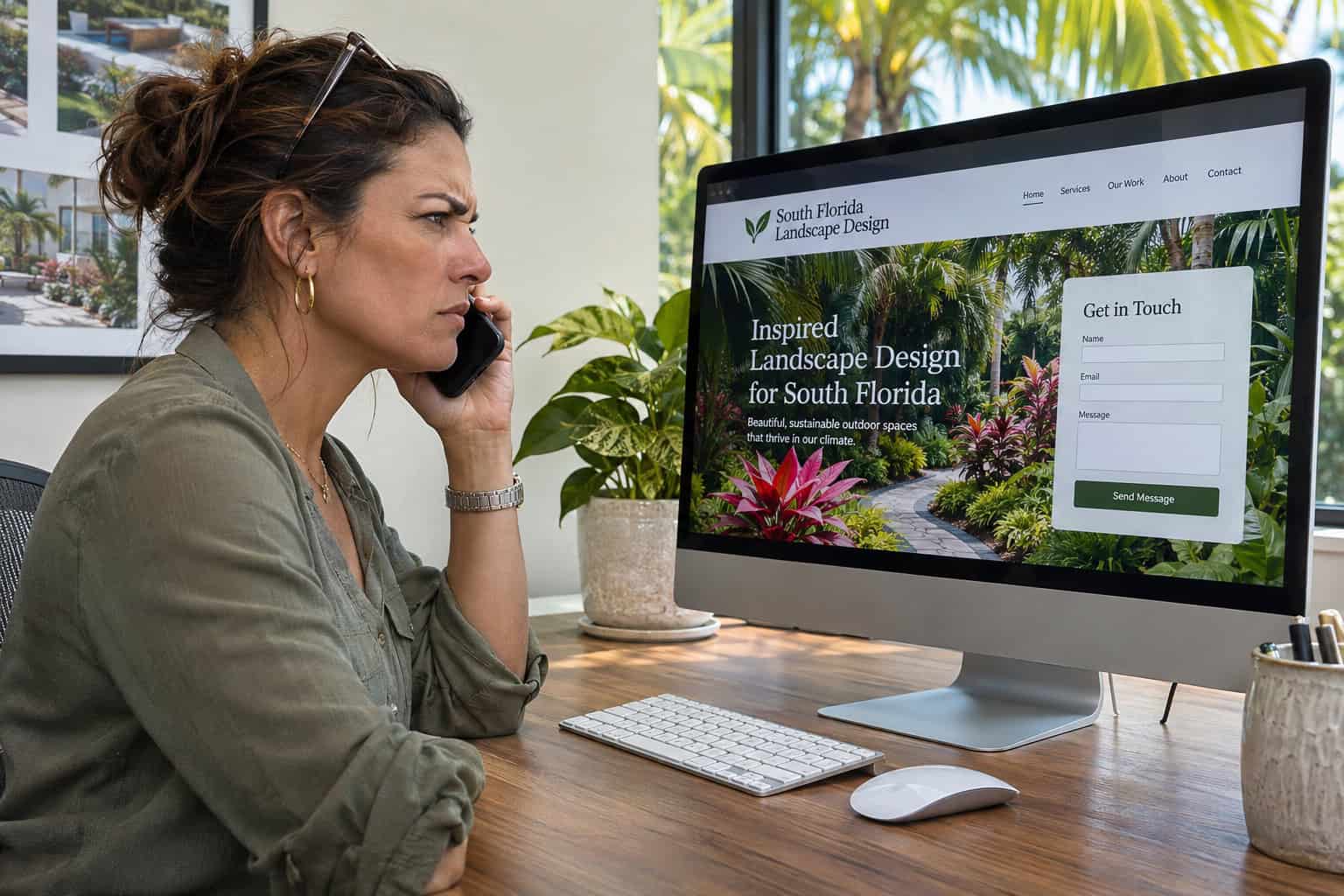
A frustrated business owner on the phone looking at the contact form on her website

Home  /  Digital Trends / Undisclosed Website Outsourcing

 
AGENCY ACCOUNTABILITY + WEB DEVELOPMENT

Warning Signs Your Website Is Being Outsourced By Your Agency

You hired a U.S. web agency because you wanted a U.S. team to build your site. Now you’re wondering who actually did the work. Lately, every question seems to go to someone you’ve never met. Is another company doing the work? Here’s how to find out.

Written byMaarit DurityAugust 26, 2026 · Updated November 21, 2026 · 9-minute read

THE SHORT ANSWER

How Can You Tell if Your Agency Outsources Your Website?

At SoFloWeb, I get unsolicited emails every week from overseas firms offering to take over our client work for pennies on the dollar. The pitch is called white-label development. They build the website, we put our name on it, and the client deals only with us. We turn those offers down. We would never let a client believe we built a website that another company actually developed.

Ask your agency contact who built your site and who employs that person. If the agency told you its own U.S. employees would build the site while it already planned to give the job to another company, it lied to you. A slow reply alone can’t tell you that. A written answer gives you something you can check against what you were sold.

The question worth putting in writing: “Did anyone outside your company build or maintain our website? If so, what did they work on? Why was it outsourced, and does the outside company still have access to our site?”

The First Warning Sign Is Having to Ask Twice

The first thing you may notice is how often you have to repeat yourself. You send a clear change, your contact confirms it, and the next time you open the site, the wrong thing has been changed. You end up explaining the same request again. After a few rounds, it’s fair to wonder whether the person editing your site ever saw your original message. Even if they saw it, did they understand what you wanted changed? A phrase your staff uses every day may mean something different to someone unfamiliar with your business or with how your U.S. customers use it.

Here’s how that can happen. You send instructions to the agency you hired. Someone there passes a shortened version to a developer at another company. The developer follows the version they received. By the time the page comes back to you, a detail you took care to spell out is gone. Before the next edit, ask the person making it to describe what customers should see or be able to do once the change is live. You can clear up a misunderstanding in that conversation and save both sides another round of revisions.

The Signs You Notice Once the Work Begins

You Can’t Speak to the Person Making the Changes

When a change comes back wrong, the quickest way to clear it up is often a short call with the person who made it. Ask your contact to bring the developer onto the call. Pay attention to what happens next.

  • Your contact offers to forward another message, even after several emails have failed to clear up the same request.
  • You ask who made the change. The only name you get is “our team.”
  • You report a problem during the support hours you paid for, and nobody can tell you who is fixing it or when you’ll hear back.

The Team You Were Promised Is Hard to Find

Before you sign, pick a site in the agency’s portfolio and ask which parts its employees built. If you’re already a client, ask the same question about your own site. The answer should tell you who designed the pages, who built them and where an outside specialist helped.

The Same Mistakes Keep Coming Back

Watch what happens after you correct the copy. You ask for U.S. English, but “colour” and “enquiry” keep appearing. Or you send the correct spelling of a service and find the same typo on the live page. If errors also slip through in emails, ask who proofreads the work before customers see it.

People on either side of the Atlantic use British spellings. The concern is that you approved one version and the agency published another.

Another Business Has the Keys to Your Website

An unfamiliar name on a hosting bill usually belongs to the company that runs the server. An unfamiliar person asking for administrator access is a different matter. Before you approve it, ask what they will do, what customer information they can see and when their access will end.

If the agency needs another company’s permission to hand over your site files, check your agreement. Find out who controls the files and how you can get a copy.

Why Agencies Outsource and Why Some Hide It

A staff developer stays on the payroll between projects. Hiring an outside specialist lets an agency pay for the work one project at a time.

Why an Agency Brings In Outside Help

Sometimes the project calls for a skill the agency rarely needs. A designer might need a developer who knows how to connect an online store to a client’s inventory system. Other times the agency’s staff is booked and the client has a firm launch date. An outside specialist can make that job possible. The agency can explain who will do the work, why that person is involved and who will support the site afterward. The client can decide whether that arrangement works for them. Why employers use outside teams.

Why an Agency Might Hide the Arrangement

On a fixed-price project, the agency keeps more of the fee if it can buy the same work for less. But if the client chose the agency specifically for its U.S. team, admitting who will do the work could cost it the sale.

Two people reviewing a paper sketch of a website contact form

ASK THE DEVELOPER TO WALK YOU THROUGH IT

Ask the developer to send a test inquiry through your website while you’re on the call. You can see whether it reaches the right inbox and find out who can fix it if it doesn’t.

What Web Developers Earn in the U.S. and Overseas

What Web Developers Earn

You agreed to a premium price because the agency told you its own U.S. developers would build your website. The annual salaries below show why that promise is worth questioning. An agency can collect the full price you agreed to, pay an overseas supplier a fraction of that fee to do the build, and keep the difference after its own expenses.

If an agency wins your business by promising its own U.S. employees will build your site while it already plans to send the work overseas, it has sold you that job under false pretenses. The developer who did the work kept their end of the bargain. The agency took your money for a U.S. team it never intended to provide. By hiding who was doing the job, it denied you the chance to decide what that work was worth to you.

Indeed reports the average monthly base pay below. The annual estimates are 12 times the rounded monthly figures in U.S. dollars, using November 20 exchange rates. Salary figures and supplier prices were checked November 21, 2026.

CountryAverage monthly payApprox. U.S. dollars per month / yearSalaries reported
India17,860 Indian rupees$193 / $2,31675 · Sept. 1, 2026
Pakistan43,789 Pakistani rupees$158 / $1,896510 · Nov. 16, 2026
Philippines33,601 Philippine pesos$527 / $6,324845 · Nov. 15, 2026

The U.S. Bureau of Labor Statistics reported a median annual wage of $92,650 for U.S. web developers in May 2025, about $7,721 a month. The overseas figures above are averages from smaller samples, especially in India. Experienced developers can earn considerably more. These are employee wages. To estimate the agency’s profit on your project, you would also need its supplier bill and its own costs. U.S. wage data · Exchange-rate bulletin.

What Web Developers Earn in Florida

Indeed puts the average base salary for a Florida web developer at $69,074 a year, or about $5,756 a month. It used 107 salaries from Florida job postings over three years, updated October 1, 2026. The listed annual averages were $58,035 for entry-level developers and $86,083 for senior developers.

When a Florida agency tells you its price reflects the cost of keeping developers on staff, the $69,074 average gives you a way to judge that claim. A developer on its Florida payroll earns about $5,756 a month before benefits. The overseas pay figures above range from about $158 to $527 a month. If the agency used local payroll to justify its quote while secretly handing your build to an overseas supplier, you paid a premium for a Florida team you never got. The wage gap shows why that switch can be lucrative. The agency’s actual savings depend on what the supplier charged and how much work the agency did itself. Florida web developer salary data from Indeed.

How Much of Your Fee Pays for the Work?

Your invoice tells you what the agency charged. To see how much it could keep, you also need to know what it paid the outside developer and what work its own staff did.

What Agencies Pay Outside Suppliers

The salaries above tell you what individual employees earn. The prices here tell you what an overseas business charges a U.S. agency for a service. One supplier in India advertises development at $40 per hour, sold in 40-hour blocks. The $1,600 buys 40 hours of work with a named lead developer and progress updates. The offer doesn’t specify how many people will work those hours or what any one of them earns.

An agency might negotiate a lower price or hire a freelancer directly. You would need the actual quote to know what it paid. Other advertised prices in India include about $1,150 to $3,700 for an online store and $290 to $1,000 a month for SEO. Those are prices for the job or the monthly service.

In the Philippines, estimates for managing paid search run from about $240 to $1,260 or more a month. Social media management runs from about $240 to $790 or more. For paid search, the management fee covers the people running the campaign. The client’s budget for showing the ads is separate.

What the U.S. Agency Keeps When It Outsources the Work

Both examples are outsourced. You pay the U.S. agency. It hires an overseas supplier to develop the website or carry out the monthly SEO work. In these examples, the U.S. staff handles the client calls, checks the supplier’s work and manages delivery.

The figures below are illustrative. Start with your payment, subtract the supplier’s invoice, then subtract the U.S. agency’s own costs. The last row shows its profit before interest and taxes.

Outsourced website · one projectOutsourced SEO · one month
You pay the U.S. agency $8,000You pay the U.S. agency $2,000
Overseas development fee: $3,200
80 hours at $40 per hour
Overseas SEO fee: $650
U.S. agency costs: $2,640
Staff time: $1,440 · Other expenses: $1,200
U.S. agency costs: $760
Staff time: $360 · Other expenses: $400
U.S. agency profit: $2,160 (27%)U.S. agency profit: $590 (29.5%)

What U.S. Workers Lose When Work Moves Overseas

When a business owner pays extra to have a website built in the United States, there is already a customer willing to pay for American talent. If the agency quietly sends the work to the cheapest supplier it can find, the client still pays the agreed price. The agency can keep more of the fee. The U.S. designer or developer the client intended to hire never even gets a chance to quote the job.

The Job That Never Gets Posted

The cost is easy to miss because nobody has to be laid off. An agency can sign new clients every month and still never post an opening for a developer. An experienced freelancer loses the chance to earn several weeks of income. A junior developer loses something harder to replace: a first paid project with someone experienced enough to review their work, explain a mistake and trust them with more responsibility next time.

Those early jobs matter long after a website launches. The next employer wants to see a live site, hear what the applicant contributed and speak to someone who worked with them. A talented person can study for months and still need someone to give them that first chance. When agencies repeatedly sell those projects here and send them elsewhere, the next generation of U.S. developers has fewer places to start.

Who Gets the Benefit of the Lower Price?

A U.S. studio that puts its own people on the job has to quote enough to pay them. If another agency claims to offer the same in-house service while secretly buying lower-cost labor, the client can’t make a fair comparison. The honest studio can lose the contract. Its employees lose the work that would have paid their wages. The client chose a U.S. agency to keep the work here. Had the agency disclosed the outsourcing, the client could have hired the studio that actually employs U.S. developers.

There is evidence that losing access to the work you trained for can hurt your earnings. Economists studying U.S. workers from 1984 to 2002 found that workers who changed occupations because of trade suffered losses in pay even after accounting for inflation. That finding helps explain why the next job matters, too. Someone who has to leave an occupation may earn less for years of experience that their new employer has little use for. Read the research on trade, offshoring and American workers’ pay.

The client paid for a website built by U.S. workers. The agency owner took that payment, hired a lower-cost overseas supplier and kept the savings. The U.S. developer lost the chance to earn that fee. Responsibility for that decision belongs to the owner who made the promise.

What to Do When You Suspect Your Agency Outsources

Keep the proposal and any emails where the agency said who would build your site. Ask your agency contact for a written account of what its employees did, what went to a supplier and where each team worked. Ask who handles repairs now.

Compare the reply with the agreement. If you’re willing to stay, put any new terms in writing, including whether the agency needs your approval to hire outside help. If you decide to leave, get control of your accounts first.

Can You Sue an Agency That Lied About Who Built Your Website?

You hired the agency because it told you its own U.S. employees would build your website. You’ve since confirmed that an overseas company did the work. Take the proposal or sales email that won your business to an attorney, along with the message or records that identify who actually developed the site.

The timing matters. If the agency had already assigned your project overseas when it promised you a U.S. team, show the attorney how you know. Explain why that promise mattered when you signed and what the switch cost your business. Those facts help the attorney assess whether you have a fraud claim. Florida Supreme Court decision on fraudulent misrepresentation.

Read the signed contract alongside the sales pitch. Look for language about who would do the work, where it would be done and whether the agency needed your written approval to subcontract. If the agency agreed to get your approval and went ahead without it, ask counsel about breach of contract. That is a separate question from whether someone deliberately misled you before you signed.

Bring the attorney a timeline and the bills. Include the original proposal, the staffing promise, the agency’s explanation and records of any costs you believe the misrepresentation caused. Ask what you can realistically recover, what it would cost to pursue it and how soon you need to act. Counsel can check for notice requirements or an arbitration clause and advise whether to seek a negotiated refund, pursue arbitration or file a lawsuit.

Legal information only. SoFloWeb is a web agency. We do not provide legal advice. A licensed attorney can review your agreement and advise you under the law that applies to your dispute.

Get Control of Your Site Before Canceling

Make sure someone at your business can sign in to the domain, hosting and email accounts. Check access to analytics and advertising, too. Read the cancellation terms to see which files and licenses you can take. If a supplier could see customer records, ask your IT or privacy contact to review its access.

Have the new provider restore a backup and test the site, email, bookings and payments. Once those work in the new accounts, end the old service, remove old logins and change shared passwords. How to leave a web agency without losing your website.

SoFloWeb’s Perspective

At SoFloWeb, we do all of our client work in the United States. When you walk us through what your business needs, you’re speaking directly with the team responsible for building your website. You can come back to us about a design decision, a change you requested or a problem after launch. We know the work because we did it.

If a project ever called for expertise outside our team, we would explain why before bringing anyone else in. We would work only with a verified U.S. company and confirm that the people assigned to your project would do their work in the United States. A U.S. mailing address alone would never be enough for us to make that promise to you.

Before any outside work began, we would formally introduce you to the partner and the people who would be working on your site. We would explain what they would handle, what SoFloWeb would handle and who would answer your questions. You would have the chance to speak with them and decide whether you were comfortable moving forward. You should always know whose work you’re paying for. We would never present a partner’s work as our own.


QUESTIONS FROM WEBSITE OWNERS

Frequently Asked Questions About Website Outsourcing

Start here if an unfamiliar company contacts you about your site, or if you’re thinking about taking your business elsewhere.

CLEAR ANSWERS, PRACTICAL CONTEXT

After a phone call about staffing, send a short email with the names and roles you heard. Ask the agency to confirm you have them right.

WHAT TO ASK YOUR AGENCY
Does “U.S.-Based” Mean the Site Was Built Here?

No. “U.S.-based” describes where the agency operates. It makes no promise about where your website was designed or built. A U.S.-based agency can handle sales and support here while an overseas company writes the code. Even “built in the U.S.” and “built in-house” answer different questions. A U.S. freelancer can build a site here as an outside contractor. To verify both claims, ask who employed the designer and developer and which country each worked in during your project.

It should mean the agency’s own people built your website. That includes the owners if they do the work themselves. If the agency says it designs and develops sites in-house, its team should be able to tell you who designed the pages and who made them work. A shared office has nothing to do with that claim. If the agency designed your site but hired another company to develop it, the accurate description is “designed in-house, developed by an outside partner.”

Ask the outside developer which parts of your site they worked on, when they started and who at the agency assigned the job. Compare their answer with the agency’s emails about those same pages or features. The clearest evidence is a dated message showing your agency contact assigned the work to the outside developer, followed by an email from that same contact telling you an employee did it. That shows the person who answered you knew who had done the work. If all you have is the developer’s name on a file, you still need to confirm their role before drawing that conclusion.

Ask a simpler question: “Did your own employees develop my site, or did you hire another company? In which country was the work done?” The agency can answer both questions without naming an individual developer. If it refuses, you still don’t know who did the work or where.

It depends on what your business has the right to keep and whether the site can run without the old agency. If your business controls the domain and hosting, owns or can keep using the site, and has the access and licenses it needs, another agency can often take over the existing site. If you leased the site or it runs on a system only the old agency can operate, cancellation may take it offline. You may be able to keep your domain and content but still need a new website.

Who owns the website you paid for? Paying the final invoice doesn’t automatically give you ownership of everything on the site. Your agreement may give you the custom design, code and copy while photos or software remain licensed. Check what transfers to your business after payment, what you can keep using after cancellation, and whose name is on the domain registration. Who owns your website after you leave an agency?


Maarit Durity, owner of SoFloWeb

AUTHOR + TECHNICAL REVIEW

Maarit Durity

Owner, website strategist, designer, developer, SEO practitioner, and content strategist at SoFloWeb.

Maarit has worked in websites and digital marketing for more than 25 years. She writes from direct experience planning, building, rebuilding, optimizing, and measuring business websites—and takes responsibility for the technical review of this article.

Learn more about SoFloWeb and Maarit’s experience →