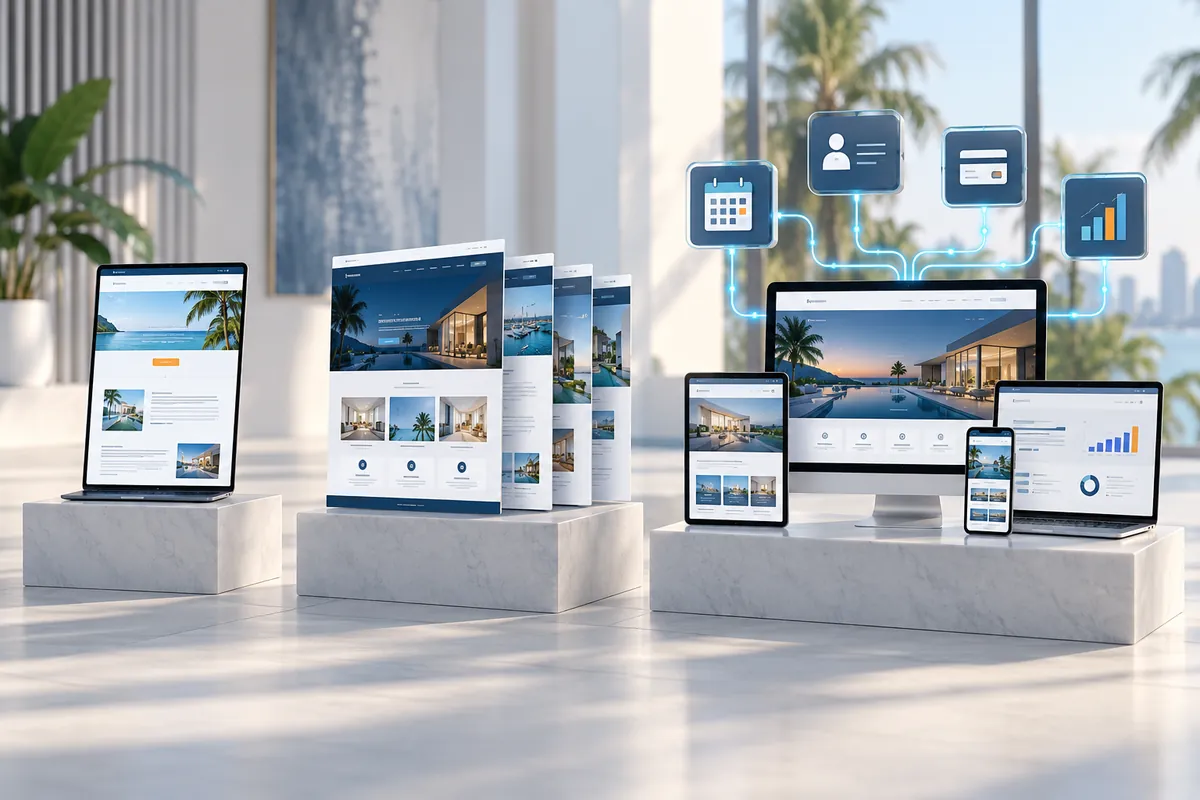
A professional website is not merely a collection of attractive pages. The project normally involves several connected stages.
Discovery and website planning
The team learns how the business operates, who the customers are, which services matter most, what actions the website should produce and what technology the project requires.
Skipping discovery makes a quote look smaller, but it moves unresolved decisions into the build, where changes are usually more disruptive.
Two similar totals can represent very different levels of research, implementation, testing, and continuing support.
Good planning can include:
- Business and customer interviews
- Competitor and search-results review
- Sitemap and navigation planning
- Page-purpose and conversion mapping
- Feature and integration requirements
- Content inventory
- Migration and redirect requirements
- Measurement and lead-tracking decisions
Website copy and content
Some companies quote design and development only, then wait for the client to provide final text. Others include professional writing or editing.
SoFloWeb includes website copy in the cost of its website projects. Clients can provide text, but we typically edit it for clarity, accuracy, conversion, traditional SEO and AI-assisted search considerations. That difference matters when comparing quotes. Our guide to who provides website copy and images explains the most common agency models and the questions to ask about photography, stock media and licensing.
Content costs more when the project requires interviews, technical research, multilingual writing, legal or medical review, original service pages, city-specific information, case studies or a large migration.
Design and user experience
Design cost depends on how many unique layouts are needed and how much is being created specifically for the business.
A template-based project may customize colors, fonts, images and a few standard sections. A more tailored project considers information hierarchy, brand presentation, mobile behavior, accessibility, conversion paths and the different content needs of the homepage, service pages, location pages, articles and contact pages.
“Custom design” should be defined in the proposal. It can mean anything from adjusting a commercial template to creating a complete visual system and unique interface components.
Development and content management
WordPress is open-source technology licensed under the GPL, so there is no fee simply to download WordPress. That does not make a professionally planned, written, designed, developed and maintained WordPress website free. The technology license and the labor required to build a business asset are different costs.
Development turns the approved plan and design into a working website. It may include:
- Responsive page templates
- WordPress configuration
- Reusable content components
- Forms and email delivery
- Navigation and internal search
- Schema markup
- Performance work
- Security configuration
- Browser and device testing
- Administrator roles and training
- Launch and DNS coordination
Quality assurance and launch
Testing is one of the easiest items to underestimate because the finished result should make the work invisible.
A website that was “finished” but not properly tested can lose leads quietly.
Quality-assurance and launch costs depend on the number of page types, functions, devices, and integrations that must be tested.
Before launch, a professional team may check:
- Desktop, tablet and mobile layouts
- Current browsers
- Forms, confirmations and notification routing
- Buttons, links, downloads and phone numbers
- Images, alternative text and media loading
- Page titles, descriptions, canonicals and index settings
- Redirects and missing pages
- Analytics and conversion events
- Cookie or privacy tools within the agreed scope
- Website backups and rollback options
- Search-engine access after launch